I had so much fun last month reading series and sequels, that I continued on with some I didn't finish in September. I never got into the first Debbie Macomber series (Cedar Cove), but she's a very popular author at our library and has just started a new series.
The Inn at Rose Harbor, the first in a new series, was available via the audio download, so I grabbed it, loaded it on my MP3 and headed to the pool. This is a very cozy cozy. There are some interesting characters presented and a delightful sense of place. The writing and dialogue border on the banal. The plot is not brain-taxing, and since I haven't read any of the previous series, I can't tell if any of the story or inhabitants are carry-overs.
Basically, this one is chick-lit without the steamy romance. Jo Marie Rose, a recent widow uses her inheritance to buy an old but well-managed inn in Cedar Cove Washington. In this first of what the author promises us are many stories set at the Inn, we are introduced to two troubled people, we meet the town librarian, the resident dog, and a potential romance - although I suspect that won't bloom for at least 4-5 books. It was a pleasant read. It won't win any Pulitzers. It may give some people a sugar sweet overdose, but it will certainly be enjoyed by those who followed the first series. I'm at least willing to read the next two or three to see how the lives of these characters evolve.
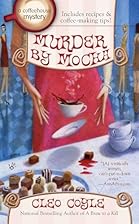
Cleo Coyle has a wonderful series set in a coffeehouse in Manhattan. In this latest one in the series, Murder by Mocha, Clare Cosi, the owner finds that her wonderful custom blend of coffee is being used in a rather irregular (and perhaps illegal) recipe to promote a powder to be used as an aphrodisiac. There's a wonderful cast of characters and a well-plotted mystery (is there a murder or isn't there?) I read the first two in the series but so long ago that this was really like reading a new series for me. I got this one in a BOGOF offer through Audible. These cozies are terrific to listen to when you don't have the energy for intense concentration. The coffee and food discussions provide enough verbal caffeine to keep me interested, and I'll certainly be on the lookout for another.
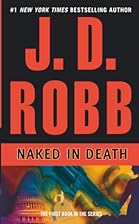
Now so many of my LibraryThing reading buddies, and my library patrons, love this series so much, I decided I'd read ONE to see what all the fuss was about. I don't usually like a lot of hot steamy chick-lit romance, and I gave up reading Nora Roberts several years ago, but I gotta tell you, this one has a hook in me. I've already started book #2, although I'm not sure I'd be able to take all 44 of these in a concentrated dose. Maybe one or two a year.
I was surprised at how much I liked the characters- they are strong, well-developed, believable. Eve Dallas, a NYC police homicide detective is a seriously emotionally crippled woman and the first book gives us just enough background to see that handicap and what caused it. Her main love interest and antagonist is a stunning stud called Roark. The on again, off again relationship is one that is going to give rise to lots of sparks in the future I'm sure. The plot was intense, at times scary, and with many possible suspects, it kept me guessing for quite awhile.
The setting, a rather futuristic sci-fi arena, is fascinating, and one I wouldn't have thought I'd like. The year is 2058, and science, food prep, space age weapons, legal acceptance of prostitution, and other exotic methods of travel and communication make the story just bizarre enough to be believable. Not what I expected at all, but I'm definitely going to be reading more.
Sunday, October 28, 2012
Saturday, October 27, 2012
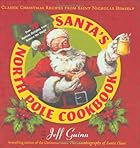
Weekend Cooking: Santa's North Pole Cookbook
Title:
Santa's North Pole Cookbook
Author: Jeff Guinn
Copyright/Year of original publication: 2007
Publisher/Format: Penguin Group/E-book
Subject: Holiday Recipes
Number of pages: 218
Santa! Am I kidding you? Halloween is just coming up this week. But...........for those of us who are Christmas baking/cooking junkies, you can never get enough ideas about goodies for the holiday. For several years, my Christmas giving has been centered on homemade delectables. I have a binder (move over Mitt) full of recipes that work for me - copied from cookbooks and clipped from magazines. Each recipe has notes about adjustments I made, who I gave them to, and where I may have found exotic ingredients. They are all then put into protective sleeves so I can open the binder, slap it up on the counter, and splash and splatter to my heart's content.
When my daily NOOK Bargain popped up in the email offering this one at a good price, I first downloaded the sample to see the table of contents. I immediately decided this one was a "BUY" and hit the button. It works equally well on both my NOOK Tablet, and on the Nook Simple Touch. I will say up front, that the single drawback is the lack of photos. There's a well defined assortment of Santa's favorites from around the world: Breakfast, Appetizers, Main Courses, Side Dishes, Drinks, and Dessert (including cookies). Santa assures us that he has sampled these goodies as he tours around the world, and gives us a unique panoply of recipes from every continent. Santa even gives us phonetic pronunciation for words we're not familiar with, hints on where to find unfamiliar ingredients, and suitable substitutes if we can't find for example baker's cheese to make Palacsinta (pancakes) from Hungary. Hint: use cottage cheese.
A particularly intriguing recipe caught my eye, although I'll admit I've not yet tried it. Every year I make at least 20-25 dozen biscotti using several different recipes, so I was drawn to Karringmelkbeskuit (Buttermilk Biscotti) from South Africa. I'm used to a double baking for biscotti, but the FOUR HOUR second bake (at 200°) is rather daunting. They are also baked in "golf ball sized" rolled balls, not in the long dipping shape I'm used to. I'm determined to try a batch of these. That long bake time will certainly allow me time to read while I'm waiting.
I've made rolls similar to the Galinha de Portugal - chicken "wraps" stuffed with sheep's cheese, peppers, onions, and a variety of spices - a sort of Portuguese cordon bleu. One we'll definitely try. There's a variety of turkey, goose and other fowl recipes from around the world, and some seafood recipes from Italy and other areas that are well known to our family from the traditional Christmas Eve festival of the seven fishes.
In addition to the traditional holiday puddings and fruitcakes, there is a fantastic assortment of sweets from around the world...many I've never tasted or heard of. Cookies, cakes and the traditional Buche de Noel from France round out the repetoire.
It's a wonderful, inspiring group of recipes at a decent price. I just wish it had some pictures - I'd be much more motivated to make some of them.
Beth Fish Reads sponsors this weekly meme where we foodies can chat about cookbooks, cooking gadgets, recipes, or anything else gustatory. Be sure to stop over there to find other terrific weekend cooking posts.
Author: Jeff Guinn
Copyright/Year of original publication: 2007
Publisher/Format: Penguin Group/E-book
Subject: Holiday Recipes
Number of pages: 218
Santa! Am I kidding you? Halloween is just coming up this week. But...........for those of us who are Christmas baking/cooking junkies, you can never get enough ideas about goodies for the holiday. For several years, my Christmas giving has been centered on homemade delectables. I have a binder (move over Mitt) full of recipes that work for me - copied from cookbooks and clipped from magazines. Each recipe has notes about adjustments I made, who I gave them to, and where I may have found exotic ingredients. They are all then put into protective sleeves so I can open the binder, slap it up on the counter, and splash and splatter to my heart's content.
When my daily NOOK Bargain popped up in the email offering this one at a good price, I first downloaded the sample to see the table of contents. I immediately decided this one was a "BUY" and hit the button. It works equally well on both my NOOK Tablet, and on the Nook Simple Touch. I will say up front, that the single drawback is the lack of photos. There's a well defined assortment of Santa's favorites from around the world: Breakfast, Appetizers, Main Courses, Side Dishes, Drinks, and Dessert (including cookies). Santa assures us that he has sampled these goodies as he tours around the world, and gives us a unique panoply of recipes from every continent. Santa even gives us phonetic pronunciation for words we're not familiar with, hints on where to find unfamiliar ingredients, and suitable substitutes if we can't find for example baker's cheese to make Palacsinta (pancakes) from Hungary. Hint: use cottage cheese.
A particularly intriguing recipe caught my eye, although I'll admit I've not yet tried it. Every year I make at least 20-25 dozen biscotti using several different recipes, so I was drawn to Karringmelkbeskuit (Buttermilk Biscotti) from South Africa. I'm used to a double baking for biscotti, but the FOUR HOUR second bake (at 200°) is rather daunting. They are also baked in "golf ball sized" rolled balls, not in the long dipping shape I'm used to. I'm determined to try a batch of these. That long bake time will certainly allow me time to read while I'm waiting.
I've made rolls similar to the Galinha de Portugal - chicken "wraps" stuffed with sheep's cheese, peppers, onions, and a variety of spices - a sort of Portuguese cordon bleu. One we'll definitely try. There's a variety of turkey, goose and other fowl recipes from around the world, and some seafood recipes from Italy and other areas that are well known to our family from the traditional Christmas Eve festival of the seven fishes.
The lamb stew recipe is fabulous. I had roasted a leg of lamb on Sunday, but there was quite a bit leftover. So I used Layla's Festive Lamb Stew from Ancient Lycia (modern Turkey). It was scrumptious!! The combination of the lamb, some wine and broth, potatoes and mushrooms, chopped tomato, onion and celery, all combined with the rosemary to waft gorgeous flavors through the air as it simmered on the stove.
I've decided to make the Ensalada Navideña (Nativity Salad) to contribute to our family get together for the big day. It's very colorful and combines several of our favorite fruits and vegetables into a beautiful celebration of produce. Here's what goes into this attractive dish:
The Salad:
2 large beets (cook, peeled, and cut in 1" chunks)
2 whole oranges (peeled, cut into chunks)
3 bananas (peeled, cut into 1" chunks)
1/2 jicama (peeled, cut into 1" chunks)
1 (16oz ) can pineapple chunks, drained
1 pomegranate (cut in 1/2 -to extract seeds
1 head iceberg lettuce - shredded.
1 (12 oz) package almonds
The Dressing:
3 Tbsp fresh lime juice
9 Tbsp vegetable oil
1 1/2 tsp brown sugar
dash salt
All these chunks should be tossed together with the dressing and refrigerated until ready to serve.
In addition to the traditional holiday puddings and fruitcakes, there is a fantastic assortment of sweets from around the world...many I've never tasted or heard of. Cookies, cakes and the traditional Buche de Noel from France round out the repetoire.
It's a wonderful, inspiring group of recipes at a decent price. I just wish it had some pictures - I'd be much more motivated to make some of them.
Beth Fish Reads sponsors this weekly meme where we foodies can chat about cookbooks, cooking gadgets, recipes, or anything else gustatory. Be sure to stop over there to find other terrific weekend cooking posts.
Thursday, October 25, 2012
And then there's Louise....
You may have noticed that Tutu hasn't been posting too much lately. I've been spending my time reading, and re-reading, and listening. I've reached a point in my life where I want to re-visit old favorites. In some cases, I want to see if they're as good as I remember, in other cases, I don't remember enough to decide whether they'd be good choices for our book discussion group.


At any rate, I've been listening through the entire Three Pines Series by Louise Penny, and I've been struck by how much more I'm enjoying them the second time around. These books have SO MUCH in them that I think it's almost impossible to take everything in at once. At the end of the audio for Bury your Dead, there is a 10 minute interview with the delightful Louise, in which she shares her vision of living in a French Canadian village, her love for all the people who live in that magical site, and her philosophy of writing mystery stories.
When asked why she doesn't put a map of Three Pines or pictures of the village in the books, she said
When she was asked if she had ideas for other stories that did not feature Gamache and/or Three Pines, she sighed, and admitted that she doesn't think she'll ever be able to walk away from them. They're so real to her now that she just wants to retreat to Three Pines, all her friends there, and keep writing. Here's hoping she NEVER changes her mind. I think I could read and re-read these forever.
I'm now listening to the last (and current) one in the series - so far- A Beautiful Mystery. I read and reviewed this last May, so I'm surprised at how much more I'm picking up this time around. Her writing is so intense and I get so wrapped up that I often forget "who dunnit"......thus making a re-read just as much fun as the original. If you're not familiar with the series, please do take a look. If you love good characters, a great sense of place, and a wonderful mystery, these are for you.


At any rate, I've been listening through the entire Three Pines Series by Louise Penny, and I've been struck by how much more I'm enjoying them the second time around. These books have SO MUCH in them that I think it's almost impossible to take everything in at once. At the end of the audio for Bury your Dead, there is a 10 minute interview with the delightful Louise, in which she shares her vision of living in a French Canadian village, her love for all the people who live in that magical site, and her philosophy of writing mystery stories.
When asked why she doesn't put a map of Three Pines or pictures of the village in the books, she said
"I think reading is at least as creative as writing, that I do half the work and.. I trust the readers or the listeners to do the rest of it....to see it in their heads. I think (for me) to take it that next step would be a mistake."I have to love an author who has so much respect for the intelligence of her readers.
When she was asked if she had ideas for other stories that did not feature Gamache and/or Three Pines, she sighed, and admitted that she doesn't think she'll ever be able to walk away from them. They're so real to her now that she just wants to retreat to Three Pines, all her friends there, and keep writing. Here's hoping she NEVER changes her mind. I think I could read and re-read these forever.
I'm now listening to the last (and current) one in the series - so far- A Beautiful Mystery. I read and reviewed this last May, so I'm surprised at how much more I'm picking up this time around. Her writing is so intense and I get so wrapped up that I often forget "who dunnit"......thus making a re-read just as much fun as the original. If you're not familiar with the series, please do take a look. If you love good characters, a great sense of place, and a wonderful mystery, these are for you.
Saturday, October 20, 2012
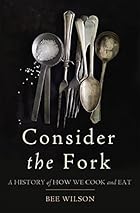
Weekend Cooking - Review : Consider the Fork
This is a delightful traipse through the story of how we prepare, cook and eat our food. Pots and pans : with rice cooker -- Knife : with mezzaluna -- Fire : with toaster -- Measure : with egg timer -- Grind : with nutmeg grater -- Eat : with tongs -- Ice : with moulds -- Kitchen : with coffee. These are the Chapters in this elegant and very readable journey through the history of our gathering, preparing and consumption of food. A perfect Weekend Cooking subject.The author has done quite a thorough job of research and presents us with fun anecdotes about our ancestors and the evolution of cooking vessels, implements, and eating habits. It's full of interesting, little known, and fascinating tidbits. I mean really! I never knew that those gigantic medieval roasts on the spits were often turned by a dog running on a treadmill. I wonder if the poor doggies at least got to gnaw on one of the bones from those juicy roasts? And I wonder if my dentist knows that up until the mid 1800's almost none of us had teeth aligned in the classic "overbite" formation?
As I read this, I realized what a mix of time frames we enjoy in our "modern" kitchens. It was such a fun read that really got me to thinking about how I approach food prep and eating. I love eating with chopsticks but I also own several sets of more traditional Western cutlery and tableware from sterling silver to stainless steel.
I still rely almost exclusively on my good steel knives for cutting and chopping (although I wield a wicked mezzaluna). My mandolin sits unused in its box. I gave away my Cuisinart - it took up way too much room on my kitchen counter. My little stick blender does a perfect job for my blending needs almost every day. I measure liquids in a pyrex measuring cup, and solids in stainless steel. I eyeball at least 50% of the dashes, pinches, tidbits and "to taste" ingredients I use and never realized until I read this that there are exact measurements certified for each of these, but who pays attention to mg or ml? Except for cake baking, I'm not a scientific "by the book" cook.
I don't own a rice cooker or a pressure cooker, I gave away my breadmaker, but I use an electric coffee bean grinder, an electric ice- cream maker and a big Kitchen Aid mixer to knead dough. My 45 year old electric Farberware rotisserie does just fine on days when I can't grill outside.
I own 5 different coffeemakers from the ubiquitous Mr. Coffee, to an elegant espresso machine. When the power goes, I still can boil water on the gas or wood burning stoves, so we can use our French press (but I'd better remember to grind an store some beans before the power goes!) I still squeeze lemons and oranges on a glass squeezie thingie by hand. I press my garlic with the side of a knife; grate my cheese, zest my lemons, and grind my nutmeg on a series of microplanes; and prep my apples for pies on a 1854 Green Mountain cast iron apple peeler-corer-slicer. My Revere copper bottomed pans are all 45 years old. I let my refrigerator make the ice cubes, and my slo-cooker do the boeuf bourginon, pulled pork, and Irish oatmeal.
When we lived in Japan, I was too pregnant to lean over the short little gas stove in our little house, so I bought my first microwave and for 9 months, until we moved onbase and got an American stove again, I cooked EVERYTHING in the microwave. My daughter and I even baked christmas cookies in "the wave." We did a Thanksgiving turkey, cupcakes, coffee, baby bottles, popcorn, hot chocolate, meatloaf, noodles, mac and cheese, oatmeal, veggies, and applesauce. To this day, I still soften butter and icecream in it, with hardly an "oopsie." I did use an electric wok for stir frying and tempura. Now I cook with gas, my electric toaster oven, the slo-cooker, the waffle iron, the Farberware, and my trusty microwave (we're on the third one in 32 years). When the weather's good, we cook on a gas grill outside, but it took us thirty years to make the switch from charcoal to bottled gas on that one. Considering some of the evolutionary events described in this book that took centuries to complete, I guess I'm pretty modern.
Here are some more interesting tid-bits from the publishers press release:
THE TURNSPIT DOG: In Renaissance Britain there was a special breed of dog, the ‘turnspit’, whose job was to turn meat as it roasted. Bred to have short legs and long bodies, they were well suited to trundling round and round in a wheel attached to the spit. But there were signs that dogs were too intelligent for the job. One eyewitness recalled that the dogs used to run away or hide when they observed the cooks getting ready to make a roast for dinner. Many households switched to using geese instead, who could be forced to trundle the wheel for up to twelve hours at a time without rebelling.
THE PESTLE AND MORTAR: For most cooks today, the pestle and mortar is a pleasurable utensil, with which we might pound up a green basil pesto for fun. It’s one of the more desirable and decorative items in any cookware store. But we forget that for most of history, the pestle was associated not with leisure but with servitude, the endless daily grind of producing enough edible nourishment. Female skeletons dating from the Stone Age in the Middle East reveal the strain that the pestle and mortar placed on the human body, with knees, hips and ankles all severely worn down from the pressure of hours of crushing grain against stone.KNIVES, CHOPSTICKS, AND TEETH: Our choice of eating utensils may not seem a question of great consequence, but the tools we choose to eat with have actually had a dramatic impact on our bodies. The alignment of our teeth in an overbite is very recent: only about two hundred years old in the West. It likely came about because of the adoption of the knife and fork, which meant that for the first time people were chopping food into tiny morsels before chewing, instead of clamping larger pieces between their teeth. In China, the overbite developed much earlier – around 900 years ago – which corresponds to the time when chopsticks were first used.
MRS MARSHALL’S AMAZING ICE CREAM MAKER: In 1885 a great female entrepreneur and cook called Mrs. Marshall invented a hand-cranked ice cream maker capable of producing delicious smooth gelato in just three minutes – much faster than any electrical machine on the homewares market today. Instead of the paddle moving round while the bucket stays still, Mrs. Marshall invented a container that turns round while the paddle stays still. There are a handful of Marshall ice cream makers still in existence and they really do work. It goes to show that not everything in a modern kitchen is better than what came before. Why didn’t Mrs. Marshall’s machine take off? It has one big drawback: the inner container was made of zinc, a poisonous metal, so the ice cream it produces is mildly toxic.
THE GIANT EGGBEATER BUBBLE: Between 1856 and 1920, no fewer than 692 separate patents were granted for eggbeaters in the United States, including the iconic Dover design. Yet not one of these supposedly labor-saving beaters did a better job than the French balloon whisk, which had been around since the sixteenth century. Almost all of these eggbeaters were swept away by the electrical revolution of KitchenAid and Cuisinart in the twentieth century.
Many thanks to Basic Books, and their publicist Caitlin Grof for letting my read this one for review. I received no compensation, nor did I promise them a favorable review.
Author: Bee Wilson
Publisher: Basic Books
Copyright/Year of original publication: 2012
Subject: Food preparation
Dates Read: October 4-15, 2012
Number of pages: 352 in hardcover edition
Source: e-book review copy from publisher via Net Galley
Beth Fish Reads sponsors this weekly meme where we foodies can chat about cookbooks, cooking gadgets, recipes, or anything else gustatory. Be sure to stop over there to find other terrific weekend cooking posts. Sunday, October 14, 2012
Autumn leaves - they're not all red and gold!
I rounded a curve in the road earlier this week and was blasted with this view. I had to pull over because it occurred to me that one of the reasons our autumns are so celebrated is the range of color. At this time, the sun had gone behind fast gathering storm clouds, so the silver leaves of the quaking, quivering Aspen on the left side of the rode looked almost white, and stood out in stark contrast to the brilliant red of the shrub on the right.
Who needs to go to the Louvre when nature paints scenes like this for us to see at home?
Friday, October 12, 2012
Review: MISS DREAMSVILLE & the Collier County Women's Literary Society by Amy Hill Hearth
For fans of "southern fiction", and all readers who enjoy stories with strong characters, a bit of history, and a sense of place, this one is a sure bet. This is one of my favorite genres, and debut novelist Amy Hill Hearth, a former journalist and the author or coauthor of seven nonfiction books, including Having Our Say: The Delaney Sisters’ First 100 Years, has done a bang-up job of painting us a picture of life as it surely could have been.
The story relates the formation and bonding of an unlikely group of characters in a Naples Florida in the early days of the civil rights movement (1963). While I wouldn't describe them as "the good ole days", others might. Jackie Hart, a transplanted Bostonian, has landed in Florida with her husband and three children. This deeply southern, sleepy little town seems like another planet to her sophisticated "Yankee" way of thinking. She is BORED. With the help of the local librarian, she forms the Collier County Women's Literary Society to meet weekly at the library to discuss books and ideas.
Members of the group include Dora, a thirty-something divorcee who rescues snapping turtles; Plain Jane, a woman nobody seems to know much about; Robbie Lee, the town's resident homosexual who works at the Sears distribution center helping local housewives pick out curtains; Mrs. Bailey White, recently released from prison having served 11 years for killing her husband; and Priscilla a black maid who has been volunteering at the library. Together these five, along with Miss Lansbury the librarian, embark on a journey through modern reading, eschewing the old classics in favor of newer, more edgy material.
In the meantime, Jackie is still somewhat stifled by the southern lifestyle and gets herself hired at the local newspaper and as the midnite to 2AM disc jockey on the local radio station. Not wanting anyone to know he's hired a Yankee, the station manager and Jackie decide to keep her identity a secret and name her MISS DREAMSVILLE. The town immediately goes into sleep deprivation staying up at night trying to figure out who she is. The group continues reading and bonding, even through some terrifying moments.
The real story is not the identity of the dreamy voice, but rather the growth of the friendships and relationships formed by the group as they gradually begin to trust, to accept and to open their minds to new ideas, new friends, and new situations. It's a tear-jerker, a knee-slapper, and a fantastic read. Be sure to set aside a few hours, because you won't put it down once you begin. It's bound to be a book-club top discussion pick in the year to come.
My thanks to Simon and Schuster for making the review copy available.
Author: Amy Hill Hearth
Publisher-Format: Simon and Schuster, e-galley
Date of publication: October 2, 2012
Subject: women's roles, racial tension, southern living
Setting: Naples Florida, 1963
Genre: contemporary "southern" fiction
Source: Net galley from publisher
The story relates the formation and bonding of an unlikely group of characters in a Naples Florida in the early days of the civil rights movement (1963). While I wouldn't describe them as "the good ole days", others might. Jackie Hart, a transplanted Bostonian, has landed in Florida with her husband and three children. This deeply southern, sleepy little town seems like another planet to her sophisticated "Yankee" way of thinking. She is BORED. With the help of the local librarian, she forms the Collier County Women's Literary Society to meet weekly at the library to discuss books and ideas.
Members of the group include Dora, a thirty-something divorcee who rescues snapping turtles; Plain Jane, a woman nobody seems to know much about; Robbie Lee, the town's resident homosexual who works at the Sears distribution center helping local housewives pick out curtains; Mrs. Bailey White, recently released from prison having served 11 years for killing her husband; and Priscilla a black maid who has been volunteering at the library. Together these five, along with Miss Lansbury the librarian, embark on a journey through modern reading, eschewing the old classics in favor of newer, more edgy material.
In the meantime, Jackie is still somewhat stifled by the southern lifestyle and gets herself hired at the local newspaper and as the midnite to 2AM disc jockey on the local radio station. Not wanting anyone to know he's hired a Yankee, the station manager and Jackie decide to keep her identity a secret and name her MISS DREAMSVILLE. The town immediately goes into sleep deprivation staying up at night trying to figure out who she is. The group continues reading and bonding, even through some terrifying moments.
The real story is not the identity of the dreamy voice, but rather the growth of the friendships and relationships formed by the group as they gradually begin to trust, to accept and to open their minds to new ideas, new friends, and new situations. It's a tear-jerker, a knee-slapper, and a fantastic read. Be sure to set aside a few hours, because you won't put it down once you begin. It's bound to be a book-club top discussion pick in the year to come.
My thanks to Simon and Schuster for making the review copy available.
Author: Amy Hill Hearth
Publisher-Format: Simon and Schuster, e-galley
Date of publication: October 2, 2012
Subject: women's roles, racial tension, southern living
Setting: Naples Florida, 1963
Genre: contemporary "southern" fiction
Source: Net galley from publisher
Thursday, October 11, 2012
Review: The Crossing Places by Elly Griffiths
This is a new series for me, recommended by several fellow readers on LibraryThing. I really didn't need another series to follow, but since there are only four, and the first one was available in front of my face at the local library, I thought I'd give it a try. I had planned to read it in September for the series and sequels bash, but just because I didn't make that deadline wasn't a reason to abandon it.
The publisher tells us
Archaeologist Ruth Galloway's smart-aleck attitude is the perfect foil for curmudgeonly detective Harry Nelson. The wide and rich span of attitudes, life experiences and motives of all the players in this mystery. along with well-sketched descriptions of the Saltmarshes where Ruth lives, give the reader a host of suspects and allows for some spectacular plot twists. There's something for everyone in this story, and I'm ready for the next one in the series. Ruth and Harry both have lots of room to grow and Griffiths appears to have the skills to take these stories forward to the next adventure.When she's not digging up bones or other ancient objects, quirky, tart-tongued archaeologist Ruth Galloway lives happily alone in a remote area called Saltmarsh near Norfolk, land that was sacred to its Iron Age inhabitants--not quite earth, not quite sea.
When a child's bones are found on a desolate beach nearby, Detective Chief Inspector Harry Nelson calls Galloway for help. Nelson thinks he has found the remains of Lucy Downey, a little girl who went missing ten years ago. Since her disappearance he has been receiving bizarre letters about her, letters with references to ritual and sacrifice. The bones actually turn out to be two thousand years old, but Ruth is soon drawn into the Lucy Downey case and into the mind of the letter writer, who seems to have both archaeological knowledge and eerie psychic powers. Then another child goes missing and the hunt is on to find her. As the letter writer moves closer and the windswept Norfolk landscape exerts its power, Ruth finds herself in completely new territory--and in serious danger. The Crossing Places marks the beginning of a captivating new crime series featuring an irresistible heroine.
Author: Elly Griffiths
Publisher-Format: Mariner Books (2010), Paperback, 320 pages
Subject: missing children, archaeology
Setting: salt flats in Norfolk England
Series: Ruth Galloway #1
Genre: mystery- amateur detective
Source: public library
Tuesday, October 9, 2012
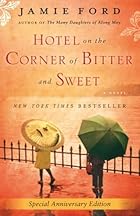
Review: Hotel on the Corner of Bitter and Sweet by Jamie Ford
This one has been sitting on my shelf for several years. When our book club chose it for the October meeting, I decided to get an early start. I've read several books about the Japanese internment camps. All have been written from the point of view of the Japanese. But I knew little if anything about the impact of the Japanese-Chinese enmity resulting from centuries of cultural rivalry and fueled by the Japanese invasion of Chinese territory before the attack on Pearl Harbor.
Henry, a 1st generation Chinese boy, born in the US, is sent by his parents to an all-white school where he is constantly confused with "the Japs". As a scholarship student, he is given a job in the kitchen, where he meets Keiko, a Japanese girl who is 2nd generation American.
Their bittersweet friendship, which Henry must keep from his parents, blossoms in spite of the fact that Keiko's family is rounded up and taken to a camp, first in Washington State, and later in Idaho. Throughout the story, Henry is mentored by a black jazz musician who befriends both of these youngsters, helping them visit and stay in touch through the long war years.
The story opens in the 1980's, as Henry is searching through property left by Japanese in the Panama Hotel looking for a jazz recording that had been his and Keiko's song. Told in a back and forth story between the 1940's and the 1980's we see how Henry confronts racial prejudice, how the war feelings of the era influenced everything that happened to both these young people.
Ford writes the story objectively and sympathetically from both sides. The reader is presented with a tale that is at once hopeful and full of tears. Without making judgement, Ford leaves the reader to decide whether there was a right or wrong, and who if anyone was at fault. I'm thinking this will generate a really good discussion in a few weeks.
Author: Jamie Ford
Publisher-Format: Ballantine Books (2009), Paperback, 301 pages
Subject: Japanese internment during World War II; Japanese-Chinese relations Setting: Seattle area
Genre: historical fiction
Source: my own shelves (also library audio download)
Henry, a 1st generation Chinese boy, born in the US, is sent by his parents to an all-white school where he is constantly confused with "the Japs". As a scholarship student, he is given a job in the kitchen, where he meets Keiko, a Japanese girl who is 2nd generation American.
Their bittersweet friendship, which Henry must keep from his parents, blossoms in spite of the fact that Keiko's family is rounded up and taken to a camp, first in Washington State, and later in Idaho. Throughout the story, Henry is mentored by a black jazz musician who befriends both of these youngsters, helping them visit and stay in touch through the long war years.
The story opens in the 1980's, as Henry is searching through property left by Japanese in the Panama Hotel looking for a jazz recording that had been his and Keiko's song. Told in a back and forth story between the 1940's and the 1980's we see how Henry confronts racial prejudice, how the war feelings of the era influenced everything that happened to both these young people.
Ford writes the story objectively and sympathetically from both sides. The reader is presented with a tale that is at once hopeful and full of tears. Without making judgement, Ford leaves the reader to decide whether there was a right or wrong, and who if anyone was at fault. I'm thinking this will generate a really good discussion in a few weeks.
Author: Jamie Ford
Publisher-Format: Ballantine Books (2009), Paperback, 301 pages
Subject: Japanese internment during World War II; Japanese-Chinese relations Setting: Seattle area
Genre: historical fiction
Source: my own shelves (also library audio download)
Saturday, October 6, 2012
So how many points is this one?
As many of you may know, Tutu has been having a successful involvement with Weight Watchers online. I've lost almost 40 pounds in the past 18 months. I love not worrying about calories, and not feeling restricted to specific foods or having anything forbidden. I've also been trying to eat more locally and healthily. To that end, last spring I "purchased" a laying hen from our local CSA. My grand-daughter christened "our hen" Martha. And boyo has Martha been doing a great job. Yesterday, Mr. Tutu stopped at the farm, picked up a carton of fresh eggs and when he got home, handed me the heaviest carton of eggs I've ever felt. I almost thought there were goose eggs mixed in.
When I cracked my morning egg into the pan to eat with my bagel thin, I was flabbergasted!! I'd read about eggs with two yolks, but I'd never seen one. So here is the proof....one egg, two yolks. So if Weight Watchers says each egg=2 points, how many points do we count for two yolks?
Stay tuned and I'll let you know if any of those other behemoths have more than one yolk!
Beth Fish Reads sponsors this weekly meme where we foodies can chat about cookbooks, cooking gadgets, recipes, or anything else gustatory. Be sure to stop over there to find other terrific weekend cooking posts.
When I cracked my morning egg into the pan to eat with my bagel thin, I was flabbergasted!! I'd read about eggs with two yolks, but I'd never seen one. So here is the proof....one egg, two yolks. So if Weight Watchers says each egg=2 points, how many points do we count for two yolks?
Stay tuned and I'll let you know if any of those other behemoths have more than one yolk!
Beth Fish Reads sponsors this weekly meme where we foodies can chat about cookbooks, cooking gadgets, recipes, or anything else gustatory. Be sure to stop over there to find other terrific weekend cooking posts.
Friday, October 5, 2012
Lazy days...jammy days
Notice....no smartphone, no computer, no alarm set. And notice another old fashioned term? A bed jacket. It's not cold enough to turn on the furnace, but it's dreary and chilled enough that sitting up in bed without something around my shoulders wasn't cutting it. My mother and grandmother always had "bed jackets" and recently they seem to be making a comeback. Mr. Tutu has given me several over the past couple years, and they're just perfect for our chilly weather. Mine are fleece, cape-shaped but with sleeves and pockets. Perfect.
Every once in a while, we all need a jammy day. I hope you get one too.
Tuesday, October 2, 2012
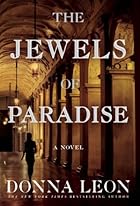
Review: The Jewels of Paradise by Donna Leon
Donna Leon is well-known for her detective series featuring the urbane Commissario Guido Brunetti. Her books often refers to tidbits of operatic music to set her themes. The settings are always in Venice and speak heavily of the angst felt by native Venetians about how commercialized the city is becoming, about the loss of traditions, etc. etc.
In Jewels of Paradise, Leon departs from the series to present us with a story still set in Venice and totally dependent on opera. If you are not familiar with opera, or don't like opera, and if you aren't comfortable with a lot of Italian, this is not your book. It certainly wasn't mine.
The premise is simple enough: two cousins think that a long dead relative who appears to have died intestate back in the mid 1700's, has left a "Treasure" and they are fighting over who is the rightful heir. The publisher gives us a quick prècis of the plot:
After nearly three centuries, two locked trunks, believed to contain the papers of a once-famous, now largely forgotten baroque composer, have been discovered. The composer was deeply connected in religious and political circles, but he died childless, and now two Venetian men, descendants of his cousins, each claim inheritance. With rumors of a treasure, they aren’t about to share the possible fortune. Caterina has been hired to attend the opening of the trunks and examine any enclosed papers to discover the “testamentary disposition” of the composer. But when her research takes her in unexpected directions and a silent man follows her through the streets, she begins to wonder just what secrets these trunks may hold.The publisher would have us believe this is a gripping and compelling story. Sorry, dear readers, but to this reader anyway, it's not. It's B.O.R.I.N.G. In order to get to a rather delightful, and "gotcha" ending, we have to wade through long, dry paragraphs of history, church politics, and melodrama, not even fit for an opera. Unless you're an opera buff, I wouldn't recommend this one to you. It's too bad, because I've come to enjoy Leon's tongue-in-cheek humor, and rather cynical take on Venetian politics. I almost felt like she'd done a ton of research on this subject, and didn't dare scrap any of it. If Catarina Pellegrini is going to star in any future books, she'd better find something more engaging than reading through old books for hours on end, and much more exciting characters than an "is he or isn't he?" Abbè if she's going to hold our attention.
Author: Donna Leon
Publisher-Format: Grove Atlantic Inc. E-galley via Net Galley
Date of publication: October 2, 2012
Subject: opera, Church politics, hidden treasures
Setting: Venice
Genre: mystery
Source: ebook from Net Galley
Autumn Wrap-up
This quarter marked the start of a second round of the Read 75 Books challenge on LibraryThing. I completed the first 75 just at the end of June and immediately embarked on another round. I like to track things monthly, but haven’t been doing a particularly good job of wrapping up. So….before I get too far down the road on the last quarter of the year, here’s a wrap-up of how I’m doing on my goals:
Goals and results:
• Continue to read in the US Presidents Challenge group. Well….I did check another JQA audio out of the library but then returned it after the first 15 minutes (awful – I can’t even remember the author!), and I did download a brand-new ebook bio of John Quincy Adams by Harlan Unger. Just out in Sept . I so enjoyed his Monroe bio that when I saw this one coming, I decided to wait for it.
• Reading ARCs...Let's count on 3-4 /month. Finished this one and then some. I started to list them, then realized that of the 40 books I've read in the last 3 months, 12 of them were advanced review copies and many of them were among the best I've read this year.
• Read biographies ---this genre (along with memoirs) is one of my favorites, and I was hoping to read at least one bio/memoir per month.. I didn't quite make it. The only one I managed was the very forgettable That Woman (bio of Wallace Simpson, Duchess of Windsor) by Anne Sebba.
• I'll be reading lots of mysteries - no brainer.....my favorites. At least 3-5 each month. Definitely did OK here - 22 read and mostly enjoyed. I celebrated my history/mystery theme of the year by resolving to re-read all of Louise Penny's wonderful Three Pines/Chief Inspector Gamache series. I've read them all once, and am currently on #6 of the 8. Wonderful reads. I also completed Colin Cotterill's Dr. Siri series, and have only 3 more to read in Andrea Camilleri's Commissario Montalbano series.
• I'm doing a lot more fiction and loving it. In addition to the mysteries, there were nine fantastic fiction works! A great mix of new and old:
Pocketful of Names by Joe Coomer
The Song of Achilles by Madeline Miller
Left Neglected by Lisa Genova
Best Exotic Marigold Hotel by Deborah Moggach
and The Unlikely Pilgrimage of Harold Fry by Rachel Joyce head the list.
• Also since I'm a Maine librarian, albeit a transplant "from away", I'm trying to do more reading of some of our great Maine authors . These have been fun to discover, and I'll be adding more to the list. The aforementioned Joe Coomer was one of the best in this group, but I need to do some more.
• Book clubs ....Our library has a monthly read and we did Pocketful of Names, Packing for Mars, and Major Pettigrew's Last Stand. Each one a stand-out.
• I was planning on more miscellaneous non-fiction. These are always fun, because I love to read good history, culture, food, just to name a few. But.... Except for Packing for Mars and The Parties Versus the People by Mickey Edwards, it looks like I haven't finished much in this category. However, I'm still slowly absorbing In the Shadow of the Sword about the rise of Islam and want to finish it before getting back to my final goal:
• My only "challenge" this year is participating in a group called War Through the Generations where we'll be reading (fiction and non-fiction) focused on World War I. This has been really interesting-- I've read 11 so far and plan at least another 6. I didn't get anything read on this category - got too immersed in real life, current political wars, and comfy escapist mysteries. I do want to read three of my original stack before the year is out.
Best of the quarter:
Fiction: (in no particular order)
The Unlikely Pilgrimage of Harold Fry
Pocketful of Names
More than Sorrow
The Song of Achilles
Non-fiction: can't pick a best since I only really read one (the other was a re-read).
Later this week, I'll set out some end of year goals. In the meantime, my nook and my MP3 and the pool are calling....
Goals and results:
• Continue to read in the US Presidents Challenge group. Well….I did check another JQA audio out of the library but then returned it after the first 15 minutes (awful – I can’t even remember the author!), and I did download a brand-new ebook bio of John Quincy Adams by Harlan Unger. Just out in Sept . I so enjoyed his Monroe bio that when I saw this one coming, I decided to wait for it.
• Reading ARCs...Let's count on 3-4 /month. Finished this one and then some. I started to list them, then realized that of the 40 books I've read in the last 3 months, 12 of them were advanced review copies and many of them were among the best I've read this year.
• Read biographies ---this genre (along with memoirs) is one of my favorites, and I was hoping to read at least one bio/memoir per month.. I didn't quite make it. The only one I managed was the very forgettable That Woman (bio of Wallace Simpson, Duchess of Windsor) by Anne Sebba.
• I'll be reading lots of mysteries - no brainer.....my favorites. At least 3-5 each month. Definitely did OK here - 22 read and mostly enjoyed. I celebrated my history/mystery theme of the year by resolving to re-read all of Louise Penny's wonderful Three Pines/Chief Inspector Gamache series. I've read them all once, and am currently on #6 of the 8. Wonderful reads. I also completed Colin Cotterill's Dr. Siri series, and have only 3 more to read in Andrea Camilleri's Commissario Montalbano series.
• I'm doing a lot more fiction and loving it. In addition to the mysteries, there were nine fantastic fiction works! A great mix of new and old:
Pocketful of Names by Joe Coomer
The Song of Achilles by Madeline Miller
Left Neglected by Lisa Genova
Best Exotic Marigold Hotel by Deborah Moggach
and The Unlikely Pilgrimage of Harold Fry by Rachel Joyce head the list.
• Also since I'm a Maine librarian, albeit a transplant "from away", I'm trying to do more reading of some of our great Maine authors . These have been fun to discover, and I'll be adding more to the list. The aforementioned Joe Coomer was one of the best in this group, but I need to do some more.
• Book clubs ....Our library has a monthly read and we did Pocketful of Names, Packing for Mars, and Major Pettigrew's Last Stand. Each one a stand-out.
• I was planning on more miscellaneous non-fiction. These are always fun, because I love to read good history, culture, food, just to name a few. But.... Except for Packing for Mars and The Parties Versus the People by Mickey Edwards, it looks like I haven't finished much in this category. However, I'm still slowly absorbing In the Shadow of the Sword about the rise of Islam and want to finish it before getting back to my final goal:
• My only "challenge" this year is participating in a group called War Through the Generations where we'll be reading (fiction and non-fiction) focused on World War I. This has been really interesting-- I've read 11 so far and plan at least another 6. I didn't get anything read on this category - got too immersed in real life, current political wars, and comfy escapist mysteries. I do want to read three of my original stack before the year is out.
Best of the quarter:
Fiction: (in no particular order)
The Unlikely Pilgrimage of Harold Fry
Pocketful of Names
More than Sorrow
The Song of Achilles
Non-fiction: can't pick a best since I only really read one (the other was a re-read).
Later this week, I'll set out some end of year goals. In the meantime, my nook and my MP3 and the pool are calling....
Sunday, September 30, 2012
September Series - A Track of Sand by Andrea Camilleri
Ending my September Series reading with another of my favorite mystery series and detectives....the incomparable Commissario Salvo Montalbano. These are light but not cozy, intricate but not too convoluted, funny but not
insulting, and often worthy of a post on weekend cooking. Salvo loves to eat and between Adelina his housekeeper and Enzo who runs the local trattoria, we are constantly being treated to gustatory temptations.
In this adventure, involving a dead horse, Salvo investigates (illegal) horse racing and its possible ties to the Mafia. He has his house ransacked, goes through tremendous angst over growing old and slowing down, and finds himself dallying with the sumptuous owner of the dead horse in an effort to prove himself still a good functioning Sicilian male. He has to determine if the horse (who disappeared after the body was discovered) is in fact the Senora's missing steed, and what if any relation the horse murder has to do with his house being tossed. And then he has to come to grips with his increasing need to wear reading glasses!!
The usual cast of characters is in evidence. By now after reading 10 of these, I feel the gang is like family. We know Mimi, and Catarello and Livia and Ingrid. In fact in this one, Ingrid plays a much larger role than the long-suffering Livia.
This is a series that always delights. It's best taken in small doses - the stories are all short (never more than 270+/- pages or 5-6 hours of audio) and do tend to start sounding alike if too many are read together. They are also stories that can be read independently and don't necessarily need to be read in order. If you love visiting foreign settings, enjoy a good crime filled mystery with not too many plot twists, salivate over descriptions of incredible food, and want a cast of loveable quirky characters, this series should delight you. They are also available (with sub-titles) on DVD at many local libraries--especially delightful if you're a visual learner.
Author: Andrea Camilleri
Translator: Stephen Sartarelli
Publisher-Format: Blackstone Audio 5 hr, 26 min
Year of publication: 2010
Subject: murder, aging
Setting: Vigata Sicily
Series: Commissario Montalbano
Genre: police procedural mystery
Source: public library audio download
insulting, and often worthy of a post on weekend cooking. Salvo loves to eat and between Adelina his housekeeper and Enzo who runs the local trattoria, we are constantly being treated to gustatory temptations.
In this adventure, involving a dead horse, Salvo investigates (illegal) horse racing and its possible ties to the Mafia. He has his house ransacked, goes through tremendous angst over growing old and slowing down, and finds himself dallying with the sumptuous owner of the dead horse in an effort to prove himself still a good functioning Sicilian male. He has to determine if the horse (who disappeared after the body was discovered) is in fact the Senora's missing steed, and what if any relation the horse murder has to do with his house being tossed. And then he has to come to grips with his increasing need to wear reading glasses!!
The usual cast of characters is in evidence. By now after reading 10 of these, I feel the gang is like family. We know Mimi, and Catarello and Livia and Ingrid. In fact in this one, Ingrid plays a much larger role than the long-suffering Livia.
This is a series that always delights. It's best taken in small doses - the stories are all short (never more than 270+/- pages or 5-6 hours of audio) and do tend to start sounding alike if too many are read together. They are also stories that can be read independently and don't necessarily need to be read in order. If you love visiting foreign settings, enjoy a good crime filled mystery with not too many plot twists, salivate over descriptions of incredible food, and want a cast of loveable quirky characters, this series should delight you. They are also available (with sub-titles) on DVD at many local libraries--especially delightful if you're a visual learner.
Author: Andrea Camilleri
Translator: Stephen Sartarelli
Publisher-Format: Blackstone Audio 5 hr, 26 min
Year of publication: 2010
Subject: murder, aging
Setting: Vigata Sicily
Series: Commissario Montalbano
Genre: police procedural mystery
Source: public library audio download
Saturday, September 29, 2012
September Series: Choker by Frederick Ramsay
I read another mystery in this series (Scone Island) earlier this summer and really enjoyed the characters of Ike Schwartz and his love Ruth Harris in that adventure set in Maine. That was #8, and I wanted to go back to see how the series got started. I saw this audio available, and grabbed it. Sometimes it's better to start in the middle of a series rather than the beginning to get a feel for whether the character has developed enough to sustain ongoing episodes.
In this story, Ike, who is a retired CIA agent now serving as a small town sheriff in western Virginia, decides to take a real vacation staying in a house on the beach in Delaware. No sooner does he get settled in however, then he is tracked down by his old CIA buddy Charley and asked to go investigate the disappearance of Charley's niece's fiancè when the airplane he was flying disappeared off the radar over the Chesapeake Bay. Just before he lost contact, he had called his fiancee and told her to call her uncle. What did he see before he crashed? Ike reluctantly agrees to check into the "crash" and is soon sucked into an intricate plot, on the trail of what may be a terrorist plot against the US.
In the meantime, back home, his deputy is dealing with a Satanic cult.................and it was here that Ramsay lost me. At first I thought this cult was going to get tied into the terrorist story, but if it did I missed it. The whole satanic thing was nothing but pure distraction. I wonder if the author felt he didn't have enough in the main plot to carry a full-length book? The main story was great and didn't need the side-bar that periodically popped up. I hope that none of the others in the series have these kinds of "extras."
I enjoyed the main story, found it well-plotted, fast-paced and unfortunately, chillingly believable. Trying to figure out whether the plane crashed or was somehow "brought down", trying to figure out what the pilot was frantically calling about before he was lost, who was responsible and whether Ike would come out of this adventure alive, kept me reading all night. Even with the satanic diversion, it was good enough to have me looking for another in the series.
Author: Frederick Ramsay
Publisher-Format: Blackstone Audio 8 hr 33 min
Year of publication: 2009
Narrator: Lloyd James
Subject: espionage, terror, satanism
Setting: Delmarva, Chesapeake Bay area
Series: Ike Schwartz Mysteries (book 5)
Genre: mystery, thriller, government agents
Source: public library download
In this story, Ike, who is a retired CIA agent now serving as a small town sheriff in western Virginia, decides to take a real vacation staying in a house on the beach in Delaware. No sooner does he get settled in however, then he is tracked down by his old CIA buddy Charley and asked to go investigate the disappearance of Charley's niece's fiancè when the airplane he was flying disappeared off the radar over the Chesapeake Bay. Just before he lost contact, he had called his fiancee and told her to call her uncle. What did he see before he crashed? Ike reluctantly agrees to check into the "crash" and is soon sucked into an intricate plot, on the trail of what may be a terrorist plot against the US.
In the meantime, back home, his deputy is dealing with a Satanic cult.................and it was here that Ramsay lost me. At first I thought this cult was going to get tied into the terrorist story, but if it did I missed it. The whole satanic thing was nothing but pure distraction. I wonder if the author felt he didn't have enough in the main plot to carry a full-length book? The main story was great and didn't need the side-bar that periodically popped up. I hope that none of the others in the series have these kinds of "extras."
I enjoyed the main story, found it well-plotted, fast-paced and unfortunately, chillingly believable. Trying to figure out whether the plane crashed or was somehow "brought down", trying to figure out what the pilot was frantically calling about before he was lost, who was responsible and whether Ike would come out of this adventure alive, kept me reading all night. Even with the satanic diversion, it was good enough to have me looking for another in the series.
Author: Frederick Ramsay
Publisher-Format: Blackstone Audio 8 hr 33 min
Year of publication: 2009
Narrator: Lloyd James
Subject: espionage, terror, satanism
Setting: Delmarva, Chesapeake Bay area
Series: Ike Schwartz Mysteries (book 5)
Genre: mystery, thriller, government agents
Source: public library download
Weekend Cooking --Boneless clams
Believe me, fried clams are a definite treat - and they are in fact already "boneless". We stopped at this little dinner last weekend on a road trip, and had a wonderful time with the two young gents who ran the place in coastal New Hampshire. The owner assured me they got a lot of business from the sign, because people would come in scratching their heads, looking embarrassed and asking if clams really did have bones. At least we knew our leg was being pulled.....

Beth Fish Reads sponsors this weekly meme where we foodies can chat about cookbooks, cooking gadgets, recipes, or anything else gustatory. Be sure to stop over there to find other terrific weekend cooking posts.
Friday, September 28, 2012
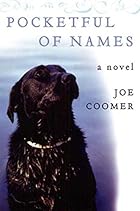
Review: A Pocketful of Names by Joe Coomer
One of the most powerful, thought-provoking books I've read this year. Our book club chose this one for its setting and to a person agreed that the setting was a large contributor to the depth and richness of the story.
Hannah is an artist who has come to live on Ten Acre No Nine Island which she inherited from her uncle Arno. She hasn't been to the island in 8 years since she'd spent summers with her uncle. Now that he's dead, she wants nothing more than to be left alone so she can paint and sculpt. That's who she is--at least that's who she thinks she is. As the story opens, a scruffy old mutt who has obviously fallen into the water someplace offshore, manages to beach himself on her island. When she discovers him, she cannot figure out what to do with him, reluctantly names him "Driftwood" and allows him into her life.
As the months progress, others arrive on her island and each time, Hannah must decide whether to allow them to stay, how to relate to them, what they ultimately will mean to them. She continues to paint and to sculpt, but finds the constant stream of people in her life are gradually skewing her perception of solitude. Was she lonely? Or did she just want to be alone?
She'd read somewhere that there were three things worth doing in life: making something new, caring for something old, and finding something lost. Her art was new; the house was worthy of care. What had been lost? It was like asking what had been forgotten. You didn't know until you remembered it. She wouldn't know what was lost until she found it. (pg. 150)The story of Hannah, her dog, her friends, the townspeople on the mainland, her half-sister, a runaway teen fleeing an abusive father, and her uncle are all intertwined in a beautiful tale of life and loss and caring and sharing. Coomer gives us a wide panoply of characters who represent the whole spectrum of life in Maine. There are warring lobstermen, hard working high school students, disabled veterans, demented elders, beached whales, tourists, and homeless relatives. How and whether Hannah allows each of these into her life, into her heart, is the story. It's a glorious story, beautifully written, with simple words, complex thoughts, and all the beauty life on the rugged shores of Maine can provide.
One of my ten best of the year.
Author: Joe Coomer
Publisher-Format: Graywolf Press (2007), Paperback, 304 pages
Subject: Life, loss, growth
Setting: Isolated island in the Gulf of Maine
Genre: literary fiction
Source: My own shelves
Thursday, September 27, 2012
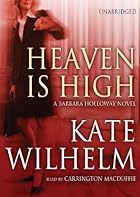
September Series: Heaven is High by Kate Wilhelm
The Barbara Holloway series is one I always enjoy. Practicing law in a restaurant booth in Eugene, Oregon, concentrating on people who can't afford high powered high priced practitioners, Barbara is a loner defense attorney who periodically teams up with her father, one of the area's most noted defense attorneys to work on some seemingly hopeless cases. Kate Wilhelm has managed to hold our interest throughout the series by constructing interesting scenarios with an assortment of both clients and crimes.
In Heaven is High, her client is Binnie, the mute wife of a retired NFL player. Binnie has come to the US illegally to escape enslavement in her native land. The problem is that no one can prove which country --Belize or Haiti -- is her country of origin. There is no documentation, no relatives, nothing to prevent this woman from being deported to a certain death.
At first Barbara, having no experience in the Immigration services area, declines the case. But when she is unable to locate a competent attorney to take the case on short notice, she decides to do some preliminary work herself. Fans of the series know what that means--preliminary quickly turns to full-blown! She's off and running, pulling in her investigative team, and trying to collect evidence to prevent Binnie's deportation. It's an exciting story, with several plot twists, and a satisfying ending. Barbara is certainly moving toward a new chapter in her life, moving away from her father's practice, but will that separation continue in future chapters?
The father-daughter partnership is one I've thoroughly enjoyed in past books of this series, and one that I hope will re-surface in the future, but this one continues the capable, competent and feisty Barbara Holloway we're used to, and is another definite winner.
Author: Kate Wilhelm
Publisher-Format: Blackstone Audio, 8 hrs. 51 min
Narrator: Carrington MacDuffie
Year of publication: 2012
Subject: immigration, drug dealing, international kidnapping
Setting: Oregon
Series: Barbara Holloway novels, book 12
Genre: Legal mystery
Source: public library download
In Heaven is High, her client is Binnie, the mute wife of a retired NFL player. Binnie has come to the US illegally to escape enslavement in her native land. The problem is that no one can prove which country --Belize or Haiti -- is her country of origin. There is no documentation, no relatives, nothing to prevent this woman from being deported to a certain death.
At first Barbara, having no experience in the Immigration services area, declines the case. But when she is unable to locate a competent attorney to take the case on short notice, she decides to do some preliminary work herself. Fans of the series know what that means--preliminary quickly turns to full-blown! She's off and running, pulling in her investigative team, and trying to collect evidence to prevent Binnie's deportation. It's an exciting story, with several plot twists, and a satisfying ending. Barbara is certainly moving toward a new chapter in her life, moving away from her father's practice, but will that separation continue in future chapters?
The father-daughter partnership is one I've thoroughly enjoyed in past books of this series, and one that I hope will re-surface in the future, but this one continues the capable, competent and feisty Barbara Holloway we're used to, and is another definite winner.
Author: Kate Wilhelm
Publisher-Format: Blackstone Audio, 8 hrs. 51 min
Narrator: Carrington MacDuffie
Year of publication: 2012
Subject: immigration, drug dealing, international kidnapping
Setting: Oregon
Series: Barbara Holloway novels, book 12
Genre: Legal mystery
Source: public library download
Wednesday, September 26, 2012
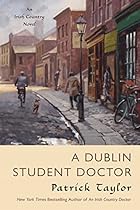
September Series: A Dublin Student Doctor by Patrick Taylor
This is a series I've enjoyed over the years, and I didn't even realize a new one had been published until a friend mentioned it. I saw it on the library's audio download and nabbed it to listen to while I was doing my hours in the pool. Besides, it fit right in with the September series theme. The pool was the only reason I persevered with this one. At 15 hours, it was about 5 hours too long. Taylor's books have each gotten more verbose, less well edited as the series goes on.
As a doctor writing about doctors, he seems to think we're all really interested in all the nitty gritty of medical diagnoses and treatments. While we may be interested, we don't need a graduate level course. This story--actually a kind of prequel to the series-- takes us back not only to the beginning of Fingal Flahertie O'Reilly's illustrious career in medicine but also the inception of his romance with nurse Kitty O'Hallorhan. It was delightful backfill for those of us who'd read all the others, but it dragged. Oh my did it drag.
The whole book, which is 496 pages in hardback, covers his medical studies in excruciating detail. Not much more to say. There are some lovely scenes with his Ma, and some scenes with Kitty where you want to crack him upside the head and tell him to get on with it, but that's about it. If you're a fan of the series and have nothing better to do and are dying to get the backfill, go for it. If you love the series, but have something else you want to read and can accept on faith that Fingal graduated from medical school and fell in love with Kitty, then on with your life, you won't miss this one.
Author: Patrick Taylor
Publisher-Format: MacMillon Audio, 15 hr, 30 min
Year of publication: 2012
Subject: life at medical school in Ireland
Setting: Dublin, 1940's
Series: Irish Country #6
Genre: folksy fiction
Source: public library download
As a doctor writing about doctors, he seems to think we're all really interested in all the nitty gritty of medical diagnoses and treatments. While we may be interested, we don't need a graduate level course. This story--actually a kind of prequel to the series-- takes us back not only to the beginning of Fingal Flahertie O'Reilly's illustrious career in medicine but also the inception of his romance with nurse Kitty O'Hallorhan. It was delightful backfill for those of us who'd read all the others, but it dragged. Oh my did it drag.
The whole book, which is 496 pages in hardback, covers his medical studies in excruciating detail. Not much more to say. There are some lovely scenes with his Ma, and some scenes with Kitty where you want to crack him upside the head and tell him to get on with it, but that's about it. If you're a fan of the series and have nothing better to do and are dying to get the backfill, go for it. If you love the series, but have something else you want to read and can accept on faith that Fingal graduated from medical school and fell in love with Kitty, then on with your life, you won't miss this one.
Author: Patrick Taylor
Publisher-Format: MacMillon Audio, 15 hr, 30 min
Year of publication: 2012
Subject: life at medical school in Ireland
Setting: Dublin, 1940's
Series: Irish Country #6
Genre: folksy fiction
Source: public library download
Tuesday, September 25, 2012
Review: More Than Sorrow by Vicki Delaney
Do not start reading this book unless you can stay up all night to finish it! Once you begin, everything else will be put on hold. I originally asked for a review copy because I am a fan of Vicki Delany, and I thought this was going to be another of her Constable Molly Smith novels. So I was only momentarily disappointed to find it was a stand alone. And believe me, the disappointment quickly turned to fascination, involvement, immersion, and absolute awe. It is always uplifting to see authors who are able to branch out from established series to try new characters, settings, and plots. Delany doesn't disappoint.
Ostensibly a murder mystery, this book is so much more. It is a multi-layered, multi-genre, multi-facted story that appears to set up quickly, but then slowly and inexorably pulls the reader into the deeper layers of the story. It is the story of 3, no - 4, no! - 5 women: Hannah Manning- a Candadian journalist who has suffered Traumatic Brain injury from an IED explosion while covering the war in Afghanistan; Maggie MacGregor - widow of a Tory soldier who died in the American Revolutionary war and who, in the late 18th century, was one of the original inhabitants of the house where Hannah is staying; Hila, an Afghani woman living in the farmhouse down the road; Lily - Hannah's 12 year old niece; and Rebecca Mansour, Hannah's neurologist.
The hard-scrapple farm where Hannah is staying belongs to her sister and brother-in-law. It was his family's farm for generations. It's small, and the couple is determined to eke out a living by producing organic and locally grown food for the family and for local families, eateries and stores. Low wages, transient workers, and never-ending back-breaking work are the norms that form the framework for the story. There's a scruffy dog, an attic full of old family mementos, an obnoxious mother-in-law, some horses, and OH! Did I mention a murder? There are men of authority whose identity is predicated on controlling women throughout the stories of all the cultures and generations of these various women.
While we certainly want to find out all the details of the murder, the real story is the unfolding realization by all the women of how much control they do or do not have over their own destinies. All the competing stories could have resulted in a scrappy patchwork quilt of a story. Instead, Delaney deftly weaves all the threads together to form a beautiful tapestry of women's roles, women's plights, and women's strengths over several centuries, and in several different cultures. Yes, the murder is solved but that's all the spoiler you'll get from me. The real story is how each of these women's lives are impacted by violence, friendship, male dominance, enslavement, and love, generosity, hope and forgiveness.
This is way more than your basic mystery story.
Many thanks to Poisoned Pen Press for making the review copy available.
Author: Vicki Delany
Publisher-Format: Poisoned Pen Press, e-galley 312 pages
Date of publication: Sept 4, 2012
Subject: Traumatic Brain Injury, women's rights, cultural differences, murder
Setting: Prince Edward County Canada
Genre: fiction, mystery
Source: e book from publisher via Net Galley
Thursday, September 20, 2012
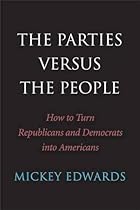
Review..The Parties vs. the People by Mickey Edwards
Did you know that the constitution does not specify that the Speaker of the House be a congressman?Did you know that a Senator who filibusters is not required to speak to the subject he is attempting to block? He or she can recite Julia Child's cookbook if they want to. All they have to do is keep talking to block legislation from ever coming to a vote.
Did you know that when members of Congress rise to address the body, they must go to the lecturn designated for their political party? There are two different lecturns!!!
The Parties Versus the People is a well thought-out dissertation on the current gridlocked government in the US today. The author, a former Republican Congressman, has expanded an article originally published in The Atlantic Monthly (Jun-July 2011 (How to Turn Republicans and Democrats Into Americans - an insider's six-step plan to fix Congress).
Edwards focuses on the role that political parties play in running elections, managing the flow of legislation through Congress and distorting (and destroying?) democracy as it was envisioned by the Founding Fathers. Many facts presented were surprising and it is an indication of just how cynical we have become that my reaction to many of his suggestions for improving were of the "good luck Charlie" variety. I sincerely hope his proposals have some chance of working.
His suggestions--clear, concise, short, easily readable and straight-forward-- include:
Reforming the election system
- Break the power of partisans to keep candidates off the general-election ballot.
- Turn over the process of redrawing congressional districts to independent, nonpartisan commissions.
- Reduce spending, increase competition.
- Establish non-partisan Congressional leadership.
- Restore democracy to Congress. Allow members of any party to offer amendments to any House bill and—with rare exceptions—put those amendments to a vote.
- Eliminate the trappings of partisanship.
- Fill committee vacancies by lot. Choose committee staff solely on the basis of professional qualifications.
- Longer work weeks, more interaction.
- Eliminate one-party White House strategy sessions.
- Sign no pledges, stand up to bullies.
"We have partisanship, incivility, unwillingness to compromise because our system itself is designed to encourage conflict..the system in which we have wrapped our democracy engenders conflict over party label, over which club one belongs to, over who might gain an advantage in the next election. This does not celebrate democracy, it destroys it." (pg. 135)
"The Oath of Office requires loyalty to the Constitution--not to the president, to a political party, or to any outside organization demanding fealty. No man or woman should enter Congress with divided loyalties. It is time for every candidate to refuse to sign any pledge, or take any oath, other than to "fully discharge the duties upon which they are about to enter. So help me. God" (pg. 156)
It takes no genius to understand why things are the way they are : we have created a political system that rewards intransigence. Democracy requires divergence and honors dissent, but what we have today is not mere divergence and does not deserve the label "dissent"; it's a nasty battle for dominance, and it's often not the dominance of an idea or a great principle but of a private club that demands undeviating fealty. (pg.171-172)
All is not doom and gloom. Edwards has painted a realistic and depressing picture of where we are, how we got that way, and how difficult it will be to change things. He does however offer concrete suggestions to get things moving toward his vision of a more democratic government where ordinary citizens once more will be able to trust that their elected representatives will be able to govern for the good of the citizenry and not for political gain.
There is no more urgent task in American politics than to make fundamental change in how we govern ourselves. (p. 175)
Author Mickey Edwards spent 16 years in Congress and 16 years teaching at Harvard and Princeton. He is a director of The Constitution Project and wrote Reclaiming Conservatism
Publisher-Format: Yale University Press 2012, 232 pages
Subject: Party politics
Genre: Non-fiction, political science
Source: e-galley from publisher via Net Galley
Subscribe to:
Posts (Atom)