Back in March 2011, I finished One was a Soldier - the book preceding this one in the series about Clare Ferguson and Russ Van Alstyne. After reading the closing line, I threw the previous book across the room yelling - "NO....you can't leave us hanging like this!"
30 plus months later, we are finally able to pick up the story. All of us who are fans of this wonderful cast of characters have been holding our collective breath to see what's going to happen. I really hate to give too much away so that readers who have not read the earlier books can have the fun of catching up before this one hits the bookshelves November 5th.
But it does pick up just where the last one ended. So let's catch up a bit. Clare Ferguson is an Episcopal priest and an Army Air National Guard Helicopter pilot. After she returned from a very stressful tour in Afghanistan, her PTSD led to drug and alcohol problems, not to mention testy scenes with the love of her life, Russ Van Alstyne. Russ, recently widowed Vietnam era vet, is Chief of Police of Millers Kill NY, where Clare's parish is located. After a long and tumultuous courtship, they have recently married and are determined to have the honeymoon they about were unable to have during the previous book. Russ has found the perfect place - about an hour out of town on a quiet lake, there is a rustic cabin for sale. It has no electricity, no plumbing, no phone line, and a big frozen pond where he is going to teach Clare the fine art of ice fishing. He wants to buy it, and this is the perfect opportunity for them to check it out to see if this could become their hideaway retreat. Clare reluctantly agrees to check it out. After all, they're both veterans of Army survival training, so what's the big deal about no power, running water or phone?
The big deal is that Clare is under pressure from her vestry to resign because of some transgressions (the cliff hangar from the last book) and Russ is facing the dismantling of his small town police force by the town council who claim the state police can provide coverage for much less money. Neither tells the other about the impending axes about to fall. Each figures that a week away from pressure will guide them to an answer. Neither counts on the storm of the century isolating them so totally that the situation becomes extremely dangerous. Neither counts on a seriously ill 7 year old being kidnapped back in Millers Kill while the police force is understaffed. Neither counts on becoming entangled with a gang of drug dealers operating nearby.
The story of Hadley Knox and Kevin Flynn - members of the MK police force whose on again, off-again relationship is off at the beginning of the book- find themselves thrown back together as partners when they are assigned to lead the search team for the missing child. This relationship has quietly developed over the last several books, and I found myself especially interested in seeing it blossom. In fact, it is becoming as compelling as the Clare and Russ story.
Spencer-Fleming is a master at blending multiple story-lines, a fairly large cast of characters and a setting untamed enough to foster all kinds of evil doings. This one does not disappoint. It is fast paced, taking place over a short week that to the participants must have seemed like a year. It has new characters arriving, old friends still there (although a few are more on the fringes with this one), and a very well plotted mystery with several "Wow, where did that come from?" plot twists.
And now, in her usual white knuckle routine, Spencer-Fleming leaves us yelling at the end again. "NO---don't leave it like this!!!" Please Julia, don't make us wait another 30 months. At least we'll have time to read the whole series again. They are definitely books that don't get old with re-reading.
Go pre-order. If this isn't the best one yet, it's sure close to whatever is.
Friday, September 27, 2013
Sunday, September 22, 2013
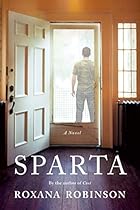
Review: Sparta by Roxana Robinson
Last night, I finished a real hard cover print book which I read in about 48 hours. I very seldom have the physical strength to hold a book for that long, or the mental wiring to single-task and sit still for that lengthy a stretch, but Sparta: A Novel by Roxanna Robinson BLEW. ME. AWAY. I could not put this one down. I did not want to read another book about the Iraq war. I did not want to read anything else grim, dark, or depressing. But since it was one of my required reads for Maine Readers' Choice, I dove in and told myself to get it over with.
I can't begin to get my thoughts ordered enough to write this one the review it deserves, but I can sing its praises to the heavens. Have no doubt-- this is a meaty book, with a subject matter that many of us find distasteful, but it is an exquisite piece of writing...no extra words, no fluff, instead it's a bold, brazen, heart-wrenching look into an anguished soul; it's a panic attack-producing introspective view of what is happening to an entire generation of this country's (and maybe the world's?) young military aged people who have gone off to serve their country with high hopes of changing the world, only to return to a world they don't know, don't understand, and a world that doesn't seem able to understand them or help them cope with the traumas they've endured. They may come home in pieces physically, or they may return looking intact, but they are all fractured indelibly from what they've done, what they've endured, what they've seen and heard and smelled and experienced.
The story is about Conrad Farrell - New England upper middle class classics major in college, enamored of the ancient Spartans and the purity of their thoughts, who decides after graduation to do "something real.. something that will make a difference" by accepting a commission in the US Marines. As a Marine leader, he is responsible for his men, and goes off to Iraq to engage in the carnage that was Fallujah and surrounding area battles. When he returns after four years, he is irrevocably changed and unable to settle back into a world he no longer recognizes.
It should be required reading in high school, in college, at our military's officer training academies and War Colleges, and by all who are in the unenviable position of treating these returning veterans both physically and mentally. Ultimately, it's not only an indictment of our mental health care system, but of our national caring system, our national conscience, and the conflicted value system of leadership and patriotism.
Ultimately it's also a book about hope, and love, and caring, and never giving up. Go get it, go read it. It's definitely going to be one of my top five of the year.
Many thanks to Sarah Crichton Books for making this available for review.
Title: SPARTA
Author: Roxanna Robinson
Publisher:Sarah Crichton Books (Farrar Staus and Giroux) (2013), Hardcover, 400 pages
Genre: Literary fiction
Subject: War trauma and mental illness
Setting: New York
Source: Review copy from the publisher
Why did I read this book now? It was given to me to review for the Maine Readers Choice Awards Committee.
I can't begin to get my thoughts ordered enough to write this one the review it deserves, but I can sing its praises to the heavens. Have no doubt-- this is a meaty book, with a subject matter that many of us find distasteful, but it is an exquisite piece of writing...no extra words, no fluff, instead it's a bold, brazen, heart-wrenching look into an anguished soul; it's a panic attack-producing introspective view of what is happening to an entire generation of this country's (and maybe the world's?) young military aged people who have gone off to serve their country with high hopes of changing the world, only to return to a world they don't know, don't understand, and a world that doesn't seem able to understand them or help them cope with the traumas they've endured. They may come home in pieces physically, or they may return looking intact, but they are all fractured indelibly from what they've done, what they've endured, what they've seen and heard and smelled and experienced.
The story is about Conrad Farrell - New England upper middle class classics major in college, enamored of the ancient Spartans and the purity of their thoughts, who decides after graduation to do "something real.. something that will make a difference" by accepting a commission in the US Marines. As a Marine leader, he is responsible for his men, and goes off to Iraq to engage in the carnage that was Fallujah and surrounding area battles. When he returns after four years, he is irrevocably changed and unable to settle back into a world he no longer recognizes.
"You don't get it. I'd love to do this....Change. I can't. Something's not working. All you do is tear me apart. I'd like to be back here with you all, but I'm not. You don't get it. I'm not here. I'm not home. I'm still there." p. 348His family (parents, brother, sister and girl-friend) are devastated when their efforts to understand are scorned, all offers of help are ignored or rejected, when they see him sinking further and deeper into non-functioning desperation and are forced to stand by helplessly. His inability to articulate his problems compounds the tragedy. The VA is not much help. (The book is set in 2006). His mother, a professional therapist, is particularly upset:
"I know what I'm supposed to do....I do it all the time as a therapist...but I can't do it with Con. I can't do it.....I'm not supposed to reach out to him. He doesn't like it. I can see that. If he were a client, I'd tell myself to stop....I'm too afraid. I can't leave him alone....What kind of a therapist! What kind of a mother! I can't stop." p. 340
It should be required reading in high school, in college, at our military's officer training academies and War Colleges, and by all who are in the unenviable position of treating these returning veterans both physically and mentally. Ultimately, it's not only an indictment of our mental health care system, but of our national caring system, our national conscience, and the conflicted value system of leadership and patriotism.
Ultimately it's also a book about hope, and love, and caring, and never giving up. Go get it, go read it. It's definitely going to be one of my top five of the year.
Many thanks to Sarah Crichton Books for making this available for review.
Title: SPARTA
Author: Roxanna Robinson
Publisher:Sarah Crichton Books (Farrar Staus and Giroux) (2013), Hardcover, 400 pages
Genre: Literary fiction
Subject: War trauma and mental illness
Setting: New York
Source: Review copy from the publisher
Why did I read this book now? It was given to me to review for the Maine Readers Choice Awards Committee.
Friday, September 20, 2013
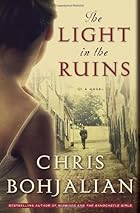
Review: The Light in the Ruins by Chris Bohjalian
In the past, I haven't been a huge Chris Bohjalian fan, but this one has changed my mind. The Light in the Ruins is a tightly written mystery story with two plots and two narrators.
There is the story of Italian partisans battling the Fascists in Tuscany, and of the Rosati family, demi-royals who lived on a huge estate with hundreds of acres of wine grapes and an ancient Etrucan burial ground and who were viewed by the partisans as collaborating with the Nazis.
Then there is the story of a murder in Florence in 1955 (the first of several by a serial killer who is one of the narrators of the book.) The police detective assigned to the case is Serafina, the first female detective ever to hold this position in Florence. As it turns out, Serafina grew up near the Rosati family who now appear to be the target of this demented killer.
As Serafina tracks her prey, she must also relive her days as a partisan, including the agony suffered when she was critically burnt and left for dead. The victims' family does not immediately recognize or acknowledge her, and she is drawn into the story of their cooperation with the Nazis in the hopes of maintaining their lives and property.
I found this tale fascinating: the background and story of the struggles of the Italian people during WWII were eye-opening. Although Bohjalian does not overwhelm us with tons of information, he manages to present enough to help the reader fix the situation in overall historical perspective, and to understand the sympathies both of the Partisans and the collaborators.
Background material aside, it is the unraveling of the story of Serafina that dominates. Her gradual reawakening to what happened to her, to her understanding of how the Rosatis were involved in her past, and how her past holds the clues to solving the mysteries of the murders of two of the Rosati women. Convoluted, intertwined, and thoroughly engaging, this story is a spectacular example of the art of writing historical mysteries that impart good history, solid plotting, interesting characters, and a gorgeous setting.
Title: The Light in the Ruins
Author: Chris Bohjalian
Publisher: Doubleday (2013), Edition: First Edition, Hardcover, 320 pages
Genre: Historial fiction
Subject: Italian collaboration with Nazis; murder
Setting: Florence, Tuscany Italy
Source: Review copy from publisher
Why did I read this book now? It's being considered for the long-list for the 2013 Maine Readers Choice Award
There is the story of Italian partisans battling the Fascists in Tuscany, and of the Rosati family, demi-royals who lived on a huge estate with hundreds of acres of wine grapes and an ancient Etrucan burial ground and who were viewed by the partisans as collaborating with the Nazis.
Then there is the story of a murder in Florence in 1955 (the first of several by a serial killer who is one of the narrators of the book.) The police detective assigned to the case is Serafina, the first female detective ever to hold this position in Florence. As it turns out, Serafina grew up near the Rosati family who now appear to be the target of this demented killer.
As Serafina tracks her prey, she must also relive her days as a partisan, including the agony suffered when she was critically burnt and left for dead. The victims' family does not immediately recognize or acknowledge her, and she is drawn into the story of their cooperation with the Nazis in the hopes of maintaining their lives and property.
I found this tale fascinating: the background and story of the struggles of the Italian people during WWII were eye-opening. Although Bohjalian does not overwhelm us with tons of information, he manages to present enough to help the reader fix the situation in overall historical perspective, and to understand the sympathies both of the Partisans and the collaborators.
Background material aside, it is the unraveling of the story of Serafina that dominates. Her gradual reawakening to what happened to her, to her understanding of how the Rosatis were involved in her past, and how her past holds the clues to solving the mysteries of the murders of two of the Rosati women. Convoluted, intertwined, and thoroughly engaging, this story is a spectacular example of the art of writing historical mysteries that impart good history, solid plotting, interesting characters, and a gorgeous setting.
Title: The Light in the Ruins
Author: Chris Bohjalian
Publisher: Doubleday (2013), Edition: First Edition, Hardcover, 320 pages
Genre: Historial fiction
Subject: Italian collaboration with Nazis; murder
Setting: Florence, Tuscany Italy
Source: Review copy from publisher
Why did I read this book now? It's being considered for the long-list for the 2013 Maine Readers Choice Award
Tuesday, September 17, 2013
Review: The Cat by Edeet Ravel
Stunning.....absolutely stunning story. I almost didn't read this after scanning the jacket blurb:
This one is elegant, lean writing at its best. There isn't a wasted word. While the reader can feel and understand the torture that Elise goes through, and can become immersed in the struggle, the detached dreamlike quality of the narration keeps it from becoming too maudlin, too ugly, or too unthinkable. Having Elise herself narrate what it happening, and letting her memories surface to explain how and why she is grieving makes this a beautiful tale.
The cat is the excuse Elise uses to continue on, but the feline never becomes the real story. Had that happened it would have been a travesty. Instead, the good kitty stays in the background, available when needed, but never pushing into the limelight. As Elise goes through the first few months of her self-imposed isolation, she deals with the memories of her own childhood, her feelings toward her mother, her son's father, her previous lover, and her only childhood friend. Each of these characters is described with just enough detail to fit in, but never intrudes on the story which is essentially Elise's.
Although it's set in Canada, the setting could have been anywhere. The time frame is a bit more important because the isolation and communications issues are very much influenced and framed by modern day media and communications devices.
In the end, Ravel manages to leave the reader with a sense of hope without closing the door on any possibilities. I wish she had been able to expand the ending a bit more. It seemed almost to say "OK, now here's a way to solve this mess, I'll leave it right here." Disappointing perhaps, but then again, this young woman is never going to have her life wrapped up with a pretty bow, so leaving the future open is quite realistic.
Right now, this one is very near (if not AT) the top of my list for 2013. Go get a copy.
Title: The Cat
Author: Edeet Ravel
Publisher: Pintail (2013), Edition: Reprint, Paperback, 240 pages
Genre: literary ficion
Subject: Dealing with grief
Setting: Northeastern Canada
Source: Courtesy copy from publisher
Why did I read this book now? It's being considered for the long-list of Maine Readers Choice Award for 2013 books.
Single mother Elise is devoted to her son; he is her world. But that world is shattered in one terrifying moment when her son is killed in a car accident. Lost, angry, and desolate, Elise sees no point in going on, and longs to join her son. But despair is not an option; Elise must stay alive to take care of her son's beloved cat, Pursie.Already this wasn't working for me. I seem to have been inundated with dark, depressing books in this batch we've been reviewing for the Maine Readers Choice Awards for next year. In fact, one of my fellow reviewers quipped that "Grim is the new funny." I hope she didn't really mean it!
This one is elegant, lean writing at its best. There isn't a wasted word. While the reader can feel and understand the torture that Elise goes through, and can become immersed in the struggle, the detached dreamlike quality of the narration keeps it from becoming too maudlin, too ugly, or too unthinkable. Having Elise herself narrate what it happening, and letting her memories surface to explain how and why she is grieving makes this a beautiful tale.
The cat is the excuse Elise uses to continue on, but the feline never becomes the real story. Had that happened it would have been a travesty. Instead, the good kitty stays in the background, available when needed, but never pushing into the limelight. As Elise goes through the first few months of her self-imposed isolation, she deals with the memories of her own childhood, her feelings toward her mother, her son's father, her previous lover, and her only childhood friend. Each of these characters is described with just enough detail to fit in, but never intrudes on the story which is essentially Elise's.
Although it's set in Canada, the setting could have been anywhere. The time frame is a bit more important because the isolation and communications issues are very much influenced and framed by modern day media and communications devices.
In the end, Ravel manages to leave the reader with a sense of hope without closing the door on any possibilities. I wish she had been able to expand the ending a bit more. It seemed almost to say "OK, now here's a way to solve this mess, I'll leave it right here." Disappointing perhaps, but then again, this young woman is never going to have her life wrapped up with a pretty bow, so leaving the future open is quite realistic.
Right now, this one is very near (if not AT) the top of my list for 2013. Go get a copy.
Author: Edeet Ravel
Publisher: Pintail (2013), Edition: Reprint, Paperback, 240 pages
Genre: literary ficion
Subject: Dealing with grief
Setting: Northeastern Canada
Source: Courtesy copy from publisher
Why did I read this book now? It's being considered for the long-list of Maine Readers Choice Award for 2013 books.
Sunday, September 15, 2013
Lazy Sunday - Darning and Day-Dreaming
Fall brings back closed toed shoes and SOCKS. In case you haven't noticed, the price of socks, along with everything else has gone through the financial ceiling, and the quality has fallen out the basement door. In other words, those $7 a pair socks are lucky they last 7 wearings. I used to just ignore small holes in socks (as long as they weren't visible to others, and then, when the holes had grown too big, I'd either keep them for wearing on hands for furniture dusting, or throw them out. I even went through a phase where I pretended I was a very "with it" younger person and wore mismatched socks, telling anyone who stared they were a fashion statement. That only lasted about three times.
Now I have a whole basket of socks, many of them among my favorites, all of which have mates, but none of which can be worn because they have holes in them. For the past month, I've been on the hunt for an old fashioned darning egg-like the one seen here. They seem to exist only in my memory or in museums these days. I have decided to try the next best thing - a baseball bat- and plan to spend some time this evening working on at least one pair of socks to practice darning techniques.
My mother was quite often heard to remind us when she was growing up after the Great Depression, and then through World War II, citizens were constantly reminded to use it up, wear it out, make it do or do without. And I do remember someone in my family (grandmother, mother, aunt?) using a darning egg. Or it may have been in Girl Scouts? Maybe that's where I was exposed to the basics. I've studied the videos and step by step guides on the internet, and have chosen a pair of my least favorites to use for practice. So we'll see.
In the meantime, it's a lovely day for a walk, and maybe a listen to an audio book while I prep the peaches and pork chops for dinner.
Enjoy the autumn....get out and soak up the gentle weather, get the wood pile stacked and the vegetables put up. Winter won't be far behind.
Match up those socks and get them darned.
Thursday, September 5, 2013
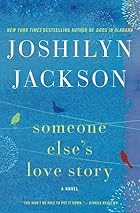
Review: Someone Else's Love Story by Joshilyn Jackson
Joshilyn Jackson just keeps getting better. This latest novel certainly exceeds the "southern fiction" genre label of her previous offerings "Gods in Alabama" and "BackSeat Saints". It's much more than just a chick-lit romance; it has a hint of mystery, and an assortment of men and women and relationships. As the title indicates, it's truly a story of relationships. The resolution of who is in love with whom and who will end up together is handled so beautifully that the reader doesn't even realize that these permutations of relationships exist until well into the story. As I read, I actually found I couldn't decide who should win the fair maiden's hand.
It's told as almost a series of small individual stories. The main character Shandi tells us her (almost) unbelievable story from the beginning in the first person. The story opens: "I fell in love with William Ashe at gunpoint in a Circle K." Then other characters' stories begin to emerge in the words of a neutral narrator. In addition to a love story, or several love stories, it is a story of friendship, of parenthood, and a tale of betrayal and forgiveness. There are plot lines about date rape, genetic research, and the power of suggestion.
This one is not going to be available until later this fall, but it would be a wonderful holiday gift for readers of southern stories, romance and good literary fiction. Put it on your list. It's going to be a winner.
Title: Someone Else's Love Story
Author: Joshilyn Jackson
Publisher: William Morrow (2013), e-review galley 352 pages
Genre: fiction
Subject: relationships; date rape; genetic research
Setting: Atlanta GA and surrounding area
Source: Edelweiss electronic review galley service
Why did I read this book now? It was available for review and I enjoy the author's works.
Tuesday, September 3, 2013
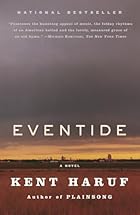
Review: Eventide by Kent Haruf
This sequel to Plainsong is every bit a good as the first. I can't seem to get enough of Kent Haruf and his picture perfect portrayal of the Midwest. I'm a coastal person, but I have come to appreciate the way of life of the inhabitants of Holt Colorado and its environs. Eventide brings back the wonderful McPheron brothers, their ward Victoria and her daughter, we meet the hapless Wallace family in their dilapidated trailer, we meet Rose the social worker, and we see the hard-working, plain, loving, and giving way of life of the plains ranchers and small town merchants. It's another perfect piece of writing.
I simply can't get enough of Haruf's plain and simple scene setting and lyrical prose. There is not a wasted word, nor a wasted scene. His characters are real, the story is true to life, and although parts can be called extremely sad, they are simply statements of life as it is. The hope and grace he portrays in his characters keeps the story from being maudlin, and leaves the reader looking for more. If you haven't discovered this superb writer, run to your bookstore or library. You won't regret it.
Title: Eventide
Author: Kent Haruf
Publisher: Vintage (2005), Edition: Reprint, Paperback, 299 pages
Genre: contemporary fiction
Subject: life in small town
Setting: Holt Colorado
Series: Plainsong
Source: Public library
Why did I read this book now? I'd read the 1st and 3rd books, wanted to fill in the series.
Saturday, August 31, 2013
Review: Pope Bob by Bill Dodds
Last month, while I was waiting in an unusually long line at the grocery store, I reached for my Nook - I was in the middle of a great new book and wanted to continue with it - only to discover that I had picked up the Kindle by mistake. I have distinctly different covers for both, but somehow had mixed them up. I don't have as many books on this one, but did have a huge group of Amazon's daily "freebies" which I often download just to see if I might be interested. If I don't like them, I delete them. The title of this one had obviously grabbed me back in 2012 when I got it, so I decided to take a quick look.
This is a delightful book. On the surface, it appears to be the story of an American priest who is one of those alcoholics who holds his liquor well and is a charming dinner companion. As such, he makes his way up the ecclesiastical ladder, finds himself doing duty in Rome, and somehow ends up being chosen as the pope. Here's where the story gets interesting. He realizes he's in way over his head, but can't seem to figure out how to retire so he can just hug his bottle and go off into his foggy drunk dreamland.
So, while on a papal trip to Canada, he evades his keepers one morning as he sneaks out in search of a "little something" to clear his seriously hungover brain, goes off on a toot, and never returns. This could have turned into a tongue-in-cheek satire but instead, the author takes the reader on a serious journey through the hell of recovering alcoholics, shows us a hopeful story about the 12 step program, a serious look at social and religious practices, a slight mystery, and introduces us to some of the most loveable (if disreputable) characters to inhabit the pages of a book in quite a while. Ultimately it's a story of sin, sorrow, forgiveness, redemption, and conversion.
Although it certainly sings of Catholicism, it paints a clear picture of the church, its clergy and all their warts. Dodds is a writer who is able to give us real people, who are real sinners, real friends, and who are willing to allow themselves to experience the grace they preach to others. A little gem.
Title: Pope Bob
Author: Bill Dodds
Publisher:Bill Dodds (2010), Amazon Digital Edition, 332 pages
Genre: fiction
Subject: alcoholism, papacy, catholicism
Setting: Washington state
Source: Amazon Kindle daily deal
Why did I read this book now? It was free and I liked the title.
Thursday, August 29, 2013
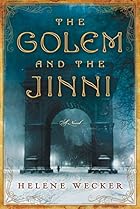
Review: The Golem and the Jinni: A Novel by Helene Wecker
Fantasy and magic are not topics I normally enjoy. But this is a marvelous story about a golem (a clay figure brought to life through some ancient Jewish spell) and a jinni (a magical fire figure of Arabian fairy tale fame - think Aladdin) who meet in New York in the 1890's after having been brought to life by their various masters and spell binders. Their relationship blossoms as they come to realize that each recognizes the other's true composition. They come to depend on each other even as they distrust the world at large.
The Golem was programmed by her master (now dead) to be able to read thoughts of others around her, and to be a wife but there doesn't seem to be a husband available since the master is dead. A wise old Rabbi deduces her true identify, takes her in and tries to help her acclimate to society.
The Jinni has been trapped for over 1000 years in a metal flask and is released when a New York tinsmith rubs the vessel which has been brought to him to repair. The tinsmith is Catholic, and there are wonderful religious discussions that take place in this area of New York where little Syria abuts the Jewish ghetto, and members of each community interact, adding another layer of richness to the story.
Helene Wecker deftly weaves Jewish and Syrian folklore, present and past incidents, historical period settings, exquisite descriptions of human emotion and religious traditions, into a story of love, promises made and broken, and makes the reader believe that this magical tale of loneliness, love, longing to belong, failure to assimilate and ultimately respect for diversity is something that actually might have happened....or could happen....or should have happened.
The reader easily slips into believing in the humaness of these characters, rooting for them to overcome the limitations of their construction - golems don't need to sleep for instance, and find eating rather boring and almost painful. Jinnis must avoid the rain, or their inner fire will be doused. The scene of the jinni trying to carry an umbrella whilst walking with the Golem is priceless.
Make no mistake, this is no simple fairy tale. There are fantastic characters who change identities and forms over the centuries and keep the reader (and the other characters) guessing as to their true identify and intentions. There are scenes from past lives in the Arabian desert. These interactions with humans are even more interesting, as are the predicaments that constantly threaten to end the current existence(s) of the Golem and the Jinni.
A five out of five star read. This is a praiseworthy debut work. I can't wait to see what Ms. Wecker produces next.
Many thanks to Harper for the review copy in connection with the Maine Readers Choice award.
Title: The Golem and the Jinni
Author: Helene Wecker
Publisher: Harper (2013), Hardcover, 496 pages
Genre: Magical fantasy; historical fiction
Subject: Religious and folklore traditions
Setting: New York, Arabia
Source: Review copy from the publisher
Why did I read this book now? It's being considered for the 2013 Maine Readers Choice Award
The Golem was programmed by her master (now dead) to be able to read thoughts of others around her, and to be a wife but there doesn't seem to be a husband available since the master is dead. A wise old Rabbi deduces her true identify, takes her in and tries to help her acclimate to society.
The Jinni has been trapped for over 1000 years in a metal flask and is released when a New York tinsmith rubs the vessel which has been brought to him to repair. The tinsmith is Catholic, and there are wonderful religious discussions that take place in this area of New York where little Syria abuts the Jewish ghetto, and members of each community interact, adding another layer of richness to the story.
Helene Wecker deftly weaves Jewish and Syrian folklore, present and past incidents, historical period settings, exquisite descriptions of human emotion and religious traditions, into a story of love, promises made and broken, and makes the reader believe that this magical tale of loneliness, love, longing to belong, failure to assimilate and ultimately respect for diversity is something that actually might have happened....or could happen....or should have happened.
The reader easily slips into believing in the humaness of these characters, rooting for them to overcome the limitations of their construction - golems don't need to sleep for instance, and find eating rather boring and almost painful. Jinnis must avoid the rain, or their inner fire will be doused. The scene of the jinni trying to carry an umbrella whilst walking with the Golem is priceless.
Make no mistake, this is no simple fairy tale. There are fantastic characters who change identities and forms over the centuries and keep the reader (and the other characters) guessing as to their true identify and intentions. There are scenes from past lives in the Arabian desert. These interactions with humans are even more interesting, as are the predicaments that constantly threaten to end the current existence(s) of the Golem and the Jinni.
A five out of five star read. This is a praiseworthy debut work. I can't wait to see what Ms. Wecker produces next.
Many thanks to Harper for the review copy in connection with the Maine Readers Choice award.
Title: The Golem and the Jinni
Author: Helene Wecker
Publisher: Harper (2013), Hardcover, 496 pages
Genre: Magical fantasy; historical fiction
Subject: Religious and folklore traditions
Setting: New York, Arabia
Source: Review copy from the publisher
Why did I read this book now? It's being considered for the 2013 Maine Readers Choice Award
Friday, August 23, 2013
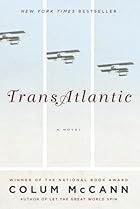
Review: Transatlantic by Colum Mccann
- Connected short stories to form a larger story are a favorite genre.
- The underlying setting - Ireland - is one I'm interested in but had not taken time to learn more about.
- The three main characters, Frederick O. Douglas, the flying team of Alcock and Brown, who flew across the Atlantic before Charles Lindbergh, and finally George Mitchell, the U.S. emissary whose flights between the US and Ireland helped cement the Good Friday accords are fascinating to read about.
It certainly is a different format that takes a bit of work on the part of the reader, but McCann's prose is so clear and unfrilly that subtle meanings emerge almost subliminally. This is going to be a talked-about and popular book because of the subject matter, but ultimately, it's the writing that should draw the highest praise.
Title: Transatlantic
Author: Colum McCann
Publisher:Random House (2013), Edition: First Edition, Hardcover, 320 pages
Genre: Historical fiction
Subject: Irish rebellion and "troubles"
Setting: US, Missouri, Newfoundland, Ireland
Source: Review copy from publisher
Why did I read this book now? Consideration for Maine Readers Choice 2014 longlist
Thursday, August 22, 2013
Review: The One-Way Bridge by Cathie Pelletier
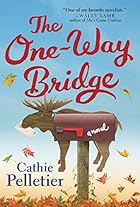
Cathie Pelletier knows her subject matter. She has captured the dialect, the life-style, the scenery, and the personalities of the fiercely independent population of Mattagash, "the last town in the middle of the northern Maine wilderness." The cover illustration opens the book as about-to-retire postman Orville Craft is confronted with the Moose mailbox of town resident and Vietnam vet Harry Plunkett. Plunkett has turned the mailbox so that Orville must insert the mail into the "$%X"end of the giant mammal container. Orville is convinced that Plunkett has it in for him.
The one -way bridge probably exists in many towns. In Mattagash, the unwritten rule states that when two vehicles approach the bridge from opposite ends, the car whose wheels enter the bridge first has the right-of-way. The other must back off and wait. This rule will eventually become central to the story.
But in addition to Orville and Harry, there's small time, homeless, jobless thug Billy Thunder. He's actually not homeless...he can sleep in his vintage Mustang convertible, except that the top won't go up, and winter is coming. And he's not actually jobless - he's a "salesman" of sorts and it's just that his suppliers (the thugs one step up in the food chain) are refusing to send him any more "supplies" until he pays what he owes. His resorting to selling faux goods of a slightly different composition nets him funds for a short time only.
There are an assortment of other lovable, laughable characters, each one symbolic of a specific social ill, whether it's boredom, unemployment, divorce, empty nests, unfulfilled fantasies, or post traumatic stress. Pelletier has painted a picture of a town that is trying, of a citizenry that still has a can-do attitude, and of a way of life that seems at once surreal and actual. The dialect is spot on. The scenery is painted with a broad brush enhanced with subtle shadings.
Without spoilers, this is not just a fun or funny book. The life issues of a variety of inhabitants are addressed with empathy, compassion and well-researched knowledge of cause and effect. The drama that develops as Orville and Harry's feud escalates serves to highlight a myriad of problems residents would rather not contemplate. It's a deep book, and one that would make an excellent choice for book discussion groups.
If you want eccentric but credible characters, beautiful scenery, and poignant emotional situations, this one's for you.
Title: The One-Way Bridge
Author: Cathy Pelletier
Publisher: Sourcebooks Landmark (2013), Hardcover, 304 pages
Genre: literary fiction
Subject: retirement, loneliness, boredom, unemployement - small town life
Setting: fictional town of Mattagash Maine
Source: E review copy from publisher through Net Galley
Why did I read this book now? The author and the subject appealed to me.
The one -way bridge probably exists in many towns. In Mattagash, the unwritten rule states that when two vehicles approach the bridge from opposite ends, the car whose wheels enter the bridge first has the right-of-way. The other must back off and wait. This rule will eventually become central to the story.
But in addition to Orville and Harry, there's small time, homeless, jobless thug Billy Thunder. He's actually not homeless...he can sleep in his vintage Mustang convertible, except that the top won't go up, and winter is coming. And he's not actually jobless - he's a "salesman" of sorts and it's just that his suppliers (the thugs one step up in the food chain) are refusing to send him any more "supplies" until he pays what he owes. His resorting to selling faux goods of a slightly different composition nets him funds for a short time only.
There are an assortment of other lovable, laughable characters, each one symbolic of a specific social ill, whether it's boredom, unemployment, divorce, empty nests, unfulfilled fantasies, or post traumatic stress. Pelletier has painted a picture of a town that is trying, of a citizenry that still has a can-do attitude, and of a way of life that seems at once surreal and actual. The dialect is spot on. The scenery is painted with a broad brush enhanced with subtle shadings.
Without spoilers, this is not just a fun or funny book. The life issues of a variety of inhabitants are addressed with empathy, compassion and well-researched knowledge of cause and effect. The drama that develops as Orville and Harry's feud escalates serves to highlight a myriad of problems residents would rather not contemplate. It's a deep book, and one that would make an excellent choice for book discussion groups.
If you want eccentric but credible characters, beautiful scenery, and poignant emotional situations, this one's for you.
Title: The One-Way Bridge
Author: Cathy Pelletier
Publisher: Sourcebooks Landmark (2013), Hardcover, 304 pages
Genre: literary fiction
Subject: retirement, loneliness, boredom, unemployement - small town life
Setting: fictional town of Mattagash Maine
Source: E review copy from publisher through Net Galley
Why did I read this book now? The author and the subject appealed to me.
Wednesday, August 21, 2013
TBRs and Net Galley
Many of you are familiar with Net Galley - that marvelous group who bring us downloadable electronic versions of coming books to add to our groaning virtual piles of books that look exciting.
For many years my husband has accused me of having "eyes bigger than stomach" disease, but since I've been keeping my eating habits under better control, that propensity to bite off more than I can handle seems to have shifted to accumulating books whether of the print, audio or "e" variety, most especially the "e" variety. They don't seem so daunting when they're out of sight on a Nook or a Kindle, instead of tumbling off the nightstand when the cat tries to jump up. Recently, I decided it was time to get real - at least with all those e-galleys, so I took some time to clean up my Nook and Kindle.
The cleanup fell into three piles:
Now....If I could just keep it that way.
For many years my husband has accused me of having "eyes bigger than stomach" disease, but since I've been keeping my eating habits under better control, that propensity to bite off more than I can handle seems to have shifted to accumulating books whether of the print, audio or "e" variety, most especially the "e" variety. They don't seem so daunting when they're out of sight on a Nook or a Kindle, instead of tumbling off the nightstand when the cat tries to jump up. Recently, I decided it was time to get real - at least with all those e-galleys, so I took some time to clean up my Nook and Kindle.
The cleanup fell into three piles:
- Those that had alas-already expired, so I made a note if there were any that still caught my fancy. I actually found only one that I sought out in real print (I actually bought it for my library) because I'd started it and wanted to see how it ended. You can see my review of The One-Way Bridge by Cathie Pelletier here tomorrow.
- Those that will not expire - several publishers do not attach an expiration file to their galleys (sorta like the paper ARC that arrives and sits forever on your shelf - long past the pub date anyway). I culled through those and earmarked several that I still want to get to, even though I may not want to read the whole thing.

- The Catholic Church -by John Allen. I know this writer and am interested in the topic so this one I'll definitely page through, at least a chapter at a time.
- A Murder in Passing by Mark de Castrique. Another author I've read before and enjoyed. Definitely want to get to this one.
- Those that I still need to read before they expire. These are the ones that I'm thinking I can get to in time (at least I'd like to try.)
- The Girls of Atomic City by Denise Kiernan- fascinating subject -secretive project involving women from across the US who built the atomic bomb in Oak Ridge Tenn during WWII.
- Cold Tuscan Sun - by David P. Wagner. A new author - new series? A protagonist portrayed as transplanted Yank in Rome certainly intrigues me enough to want to give this one a look.
- The Hired Man by Aminatta Forna - looking like one that may make it onto the long list for Maine Readers Choice - definitely want to read this one.
- AND.. several others not due for publication until late September or October. More on those as time permits.
Now....If I could just keep it that way.
Tuesday, August 20, 2013
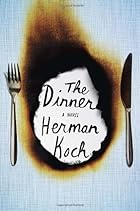
Review: The Dinner by Herman Koch
While the story is framed as a chronicle of family rivalries, it is much more: a dark tale of ethical dilemnas unearthed as each course is served, as the brothers and their wives make and receive cell phone calls, while outside, uninvited off-spring are running loose on the unsuspecting populace.
Briefly, without spoilers, the story is told by the younger brother Paul, who along with his wife Clare, does not want to be at this dinner. He resents his older brother Serge - a successful politician who is poised to become the next prime minister. He feels Serge's son is the one responsible for all the trouble that nobody wants to talk about. He resents Serge's success and notoriety, his pushing for this posh restaurant to show off, rather than going to a simple coffee-shop that he and Clare would have preferred. Paul especially detests the sycophantic staff and their fawning over his brother. Serge's wife Babette is alternately annoying, insightful, and cloying-- a thoroughly nasty piece of work. The brothers are both aware of criminal activity on the part of their sons, but neither wants to admit to their suspicions. The dance around the unspoken truth permeates the entire dinner.
How they negotiate the choices each parent faces as they try to view themselves as moral beings, as they think about their futures and the impact their choices will have on their individual families, the extended family, and ultimately even the country is a tightly drawn narrative. By limiting the structure to a single dinner, and by having the agony of making menu choices and dealing with officious waiters a way of drawing out the dinner long enough to provide some space for back fill, the author has written an incredibly complex story in the guise of a simple tale of a dinner with its menu and accompanying conversation.
This is a book to be read again, and discussed with a group. The many choices of both the characters and the author in how he chose to portray those characters is a tour-de-force.They are nasty, scary and altogether unlikable. Koch's ability to string the reader along this slippery slope is a tribute to his writing skills. This is definitely one of my nominees for the best of the year. The translation from the Dutch is superb.
Go find it. Read it. Schedule it for your book group.
Title: The Dinner
Author: Herman Koch, translated from the Dutch by Sam Garrett
Publisher: Hogarth (2013), Edition: 1ST, Hardcover, 304 pages
Genre: Literary fiction, social satire
Subject: family relations, moral decisions
Setting: Netherlands
Source: Review copy from publisher
Why did I read this book now? It's being considered for the long list for the 2014 Maine Reader's Choice Award for literary fiction.
Monday, August 19, 2013
Monday Maibox -- Review copies galore.
As a member of the selection panel for the Maine Readers Choice Awards, I get to peruse some really interesting books. This past week, I had two huge boxes of wonderful literary fiction deposited for my reading enjoyment. Below are just a few. I also of course have several still waiting on the e-readers, and my MP3 has been sadly neglected for the past month or so since I haven't had much free time to get to the pool.
Here's only a partial look at what's been arriving:


The Woman Upstairs - Claire Messud
The Lowland - Jhumpa Lahiri
A Constellation of Vital Phenomena - Anthony Marra
The Daughters of Mars - Thomas Keneally
Americanah by Chimammanda Ngozi Adichie
The Light in the Ruins - Chris Bohjalian
The Silence and the Roar by Nihad Sirees
In addition to the books for MRCA reading, I received two I'd asked for from the Atria Galley Grab -
The Tilted World by Tom Franklin and Beth Ann Fennelly and
Bellman & Black by Diane Setterfield.
Both of these authors impressed me with their previous work, so I'm anxious to see what these newest have to offer
And finally, I won another book from Bookin' with BINGO : the delightful Steamed to Death, the second in the Gourmet De-Lite mystery series by Peg Cochran. These are always fun to have on hand when your brain just will not accept another 700 pager. Cozies are always a welcome addition to my library.
So light or heavy, new author or well loved favorite, my mailbox had something to offer for any desire this week.
Here's only a partial look at what's been arriving:
The Woman Upstairs - Claire Messud
The Lowland - Jhumpa Lahiri
A Constellation of Vital Phenomena - Anthony Marra
The Daughters of Mars - Thomas Keneally
Americanah by Chimammanda Ngozi Adichie
The Light in the Ruins - Chris Bohjalian
The Silence and the Roar by Nihad Sirees
In addition to the books for MRCA reading, I received two I'd asked for from the Atria Galley Grab -
Bellman & Black by Diane Setterfield.
Both of these authors impressed me with their previous work, so I'm anxious to see what these newest have to offer
So light or heavy, new author or well loved favorite, my mailbox had something to offer for any desire this week.
Sunday, August 18, 2013
Sunday Sound - Computers??? Who needs them???
Sound off: to voice one's opinions freely with force;
Synonyms: pipe up, shoot, sound off, speak out, spout (off), talk up
Related Words: bawl, bay, bellow, call, cry, holler, roar, shout, sing (out), thunder, vociferate, yell; articulate, enunciate
Welcome to Sunday Sound-Off, a periodic posting about my reading life, my other than reading life, and life in general in Maine. I also encourage you to drop a comment sounding off about your week, your gripes, your reading life, etc.
I should probably call this a rant rather than a sound off. Last month, hubbie and I hosted a huge family reunion in central California. We had people from Washington State, Oregon, several cities in California, Virginia, New York,Texas and of course Maine, at the party. We had them from 4 months old to 95+. It was a wonderful, wonderful party, and we we thrilled that we had the opportunity to do what everyone should do..get people together when there's not a funeral attached. The next day, there was a wedding, and that was even more fun. Each event had its own day, we had glorious weather, great food, and an all around good time.
Now comes the rant.... My four-five year old laptop had been acting very squirrely, and I had a 150 count slide show to project on the wall during the reunion with everything from baby pictures to old tintypes from the Azores, etc. I could NOT afford to have this bomb. So being proactive, I decided to treat myself to a late birthday present and bought a new laptop the week before we left. I had four days scheduled at my sister Cheli's in Maryland before we left for California and I figured I'd have plenty of time to transfer the needed files to the new laptop. RIGHT? WRONG
Like a complete fool, I got a machine running Windows 8, and didn't realize there was a huge (as in very HUGE) learning curve. To top things off, I locked myself out of the new machine (don't ask) and had to wait to come home to Maine to grab recovery discs to fix that problem. I did manage to hobble through the trip with the old one, and the slide show was a huge hit. When I returned to town, not only did I have to configure the new machine, keep the old one hanging on while doing that, but I was faced with a very sick circulation desk computer at our little library. We switched out the unit with one of our Public Access machines, quickly reconfigured a couple items, and sent the sicko to the shop. When it returned with a new hard drive, I then had to do a bunch of reloading drivers, and more cleanup. A job that took an entire day.
In the meantime, I'm still learning Windows 8, Office 2013, a new "look" for LibraryThing.com, and a new G-mail configuration. Why can't the powers that be leave things alone when they're working? This old lady can certainly learn new tricks, but not all at once!!! All I can say is that if you're thinking of buying a new computer and are a windows user, unless you are a social media freak and plan to use your computer for everything except office work, then try to get one without Windows 8!
I've been a windows user since 1990. I've used every version of Windows since 3.0. I NEVER had any trouble learning new versions (it sometimes took a couple days) but this new system is SO different, SO exasperating, and SO un-useful, that, if I had the money, I'd take this machine out to the bridge and drop it overboard and then go home and order one with Windows 7 - and pay a bazillion $$$ if I had to. Obviously, that ain't happening, so I have to be patient, swallow my medicine, and act like a big girl.
OK....rant over. Weather is gorgeous, we have lots of friends and family in town, the blueberry festival is next week, hubbie's book is selling well ( www.bobbrancoauthor.com ) and except for computers, life is good. Sunday is going to be a marathon reading day.....I hope to get back to a regular reviewing schedule this coming week, but I have 3 books I want to finish first. I'm at least 1/2 done on all of them.
Have a glorious summer week.
Sunday, August 11, 2013
STRIKE FROM THE DEEP by Bob Branco
This could be sub-titled THE WORLD OF SELF-PUBLISHING. My prior prejudices against self-published books are being turned upside down. We all know because we read all the time, about the turmoil in the publishing industry caused by the introduction of Print on Demand, ebooks, e-readers, and availability of various online self-publishing programs.. For the past year, I've watched the self-pub process unfold up close and personal. Last week Bob Branco (aka Mr. Tutu) signed the contract and sent his baby to be published. The book, STRIKE FROM THE DEEP, will be available by the end of the month and like most authors, he is excited, exhausted and anxious. (As is his wife!)
I'm not going to be doing a review on this one. I've read, re-read, commented, re-commented, and no way can I be seen as an objective person, but I will, once we get them in our hands, be doing a giveaway here on the blog - probably sometime the first week in September. The official launch will be at the "big" library downtown on September 26th.
This experience has been a learning one for both of us. I've certainly gotten an insight into the writing and publishing world, and I will give a huge SHOUT OUT for the wonderful staff at Maine Authors Publishing (MAP) right here in Rockland Maine. I have reviewed a couple of their books in the past year, and find they do a quality job helping unknown authors produce readable material. Not only are they responsible for putting out some quality books, but I suspect they've probably saved a few marriages along the way. Their insistence on professional editing and composition helps the self-publisher from the get go. Bob had a marvelous editor who worked with him to make this so much better than it might have been had it been left on its own, or simply thrown into an automated online producer. Somehow the MAP folks always found a nice way of saying "maybe you should consider x or y instead of z."
And another big SHOUT OUT to our wonderful friend Pete Mansel, webmaster extraordinaire. He's been a humongous help with the book's web page here at bobbrancoauthor.com.
If you're a fan of current political thrillers, you're going to enjoy this one, if I say so myself. I'm very proud of the hard work Bob's done to make this IMHO a better than average page-turner. I might even get my own autographed copy.
I'm not going to be doing a review on this one. I've read, re-read, commented, re-commented, and no way can I be seen as an objective person, but I will, once we get them in our hands, be doing a giveaway here on the blog - probably sometime the first week in September. The official launch will be at the "big" library downtown on September 26th.
This experience has been a learning one for both of us. I've certainly gotten an insight into the writing and publishing world, and I will give a huge SHOUT OUT for the wonderful staff at Maine Authors Publishing (MAP) right here in Rockland Maine. I have reviewed a couple of their books in the past year, and find they do a quality job helping unknown authors produce readable material. Not only are they responsible for putting out some quality books, but I suspect they've probably saved a few marriages along the way. Their insistence on professional editing and composition helps the self-publisher from the get go. Bob had a marvelous editor who worked with him to make this so much better than it might have been had it been left on its own, or simply thrown into an automated online producer. Somehow the MAP folks always found a nice way of saying "maybe you should consider x or y instead of z."
And another big SHOUT OUT to our wonderful friend Pete Mansel, webmaster extraordinaire. He's been a humongous help with the book's web page here at bobbrancoauthor.com.
If you're a fan of current political thrillers, you're going to enjoy this one, if I say so myself. I'm very proud of the hard work Bob's done to make this IMHO a better than average page-turner. I might even get my own autographed copy.
Saturday, August 10, 2013
Review : Sweet Salt Air by Barbara Delinsky
Barbara Delinsky's books have always appealed to me. Her newest, Sweet Salt Air is much more than just a perfect summer read. The Maine setting is of course gorgeous, but the character development here is special. Two friends reunite after 10 years at the home where they summered together growing up. One has a very famous doctor husband suffering from Multiple Schlerosis, the other has a secret. There's a handsome loner with an attitude in residence at the other end of the island. These ingredients would be enough for most storytellers. But here, Delinsky adds a choice for the characters that makes keeping the 10 year old secret a moral dilemma. When the characters are faced with the quandry of whether to reveal the secret, the festering impasse becomes a matter of life and death.
This is way more than a beach read. It is a well-developed character study with the added features of romance and that beautiful Maine Island setting. The medical research forming the backbone of the story was presented in such a way as to avoid taking sides on some of the modern legal and ethical issues of stem-cell treatment and research, and yet was written to underscore many of the choices facing patients today as they decide whether to participate in trials, undergo new and untested treatments, etc.
I think it's one of Delinsky's best. Be sure to grab a copy. It's on the shelves now, so indulge yourself in a late summer treat.
Many thanks to St. Martin's Press for making a review copy available.
Title: Sweet Salt air
Author: Barbara Delinsky
Publisher: St. Martin's Press, 2013, 416 pages
Genre: fiction, romance,
Subject: multiple schlerosis, stem-cell treatments, privacy
Setting: island off the coast of Maine
Source: ARC from the publisher
Why did I read this book now? The setting and the subject matter interested me.
Friday, August 9, 2013
Happy Book Lover's Day
Aha!!...the perfect excuse to kick off a summer weekend of reading. Enjoy. I certainly plan to.

Illustration by Ghergich & Co.
Thursday, August 8, 2013
Review: The 100-Year Old Man Who Climbed out the Window and Disappeared
This one was way too much fun. An absolute gem of a farce. As the title suggests, Allan Karlsson cannot face another mushy meal pulverized for old folks, nor does he wish to be surrounded by doddering, drooling old fools to help him celebrate his 100th birthday in the old folks home, so he climbs out the window of his room before the birthday luncheon, and sets off on an adventure. At the bus station, he is asked by a young man to "watch the suitcase" while the youngun goes to the rest room. The bus comes, Allan picks up the suitcase, thinking its owner is on the way, and embarks on a life of crime, mayhem and memory reflection that often begs our belief. The suitcase's owner misses the bus, and Allan finds himself in possession of ...... well I don't want to spoil this one, but suffice it to say that Allan finds himself hiding out from the authorities, and not just because he doesn't want to go back to the home.
There is a trio of criminals reminiscent of the Three Stooges, a retired elephant who comes to reside with Allan's new "family", guest appearances by practically every world leader who graced the planet during Allan's 100 years, incompetent police, and a winding plot that keeps the reader laughing even while saying "that can't possibly have happened." A total package of characters, settings, and plot twists. Something for everyone.
Author: Jonas Jonasson
Publisher: Hyperion 2012, paperback, 400 pages
Genre: Fiction, farce, comedy
Subject: crime, old age, world history
Setting: Sweden, Spain, Arizona, Pacific Islands, Russia
Source: Public Library
Why did I read this book now? It was recommended by a library patron.
Wednesday, August 7, 2013
Review: How the Light Gets in - Louise Penny
Louise Penny is so good that I now get scared when she publishes a new book in this series. I find myself worrying that at last she may have stumbled and, as is the case with so many writers of series, she might be losing her touch. FEAR NOT. The latest installment of the exciting, fascinating, and spectacular Chief Inspector Gamache series, How the Light Gets in, is every bit as good as any of the early entries. In fact, in my humble opinion, it's the best one yet. Penny just keeps getting better.
At the end of the previous book The Beautiful Mystery, the reader could be excused for thinking that poor Armand was probably on his way out. Certainly, the carefully built relationships with his team were in shreds, his family devastated, his reputation crumbling. How the Light Gets In picks right up with those issues and expands them. Gamache is actually questioning his own abilities. Has he become impotent against the evil forces at large in his world? Can he no longer be sure that his homicide unit is the best in the country? Do his friends and family still respect him? Will he ever find the answers to the current mystery?
Called to the village of Three Pines to help friends cope with a mysterious death, Armand Gamache soon finds himself involved in another of Penny's twisted plots. Along the way, he continues to act as if none of his troubles exist: he is polite, urbane, studious, thoughtful, and ever the gentleman, all the while he is grieving for his lost friend Jean Guy Beauvoir, his lost reputation, and his unit's lost agents (who have been sent elsewhere in the bureaucracy of the Surète and force fed a story of his demise and degradation.) Gamache is introspective, respectful of everyone he investigates, and takes his time carefully putting all the puzzle pieces together, always aware of when a piece is missing.
Penny does an exquisite job of contrasting goodness with evil, black with white, dark with light and hope with despair. Just when the reader is ready to dissolve into overwhelming grief at the end of a beloved character or the dashing of a hope, Penny takes a turn in the road to lead the story down another path.
This is storytelling at its best.
These are characters so real one expects to walk into a bar or library and find them waiting to share a story or a drink.
Three Pines is a village so well described that when the MMA rail company's runaway trains crashed, exploded and burned the town of Lac-Meguntic in the eastern suburbs of Quebec last month, I immediately saw in those headlines the village of Three Pines going up in flames.
How the Light Gets In is so well written that I had to force myself to hide the book when I finished so I didn't immediately turn back to the beginning to start reading it again. And I will read it again, and again.
Publication date is August 27th, and pre-orders have already pushed this one into its second printing. Don't hesitate--Grab it as soon as it comes out. Many thanks to Louise Penny for the advance copy and opportunity to review it. I wonder if there's a next one?
Title: How the Light Gets In
Author: Louise Penny
Publisher: Minotaur Books, 2013, ARC 406 pages
Genre: Mystery - police procedural
Subject: murder investigation, police corruption
Setting: fictional village of Three Pines - eastern Canada
Series: Chief Inspector Gamache novels
Source: ARC from the author
Why did I read this book now? Louise Penny sent it to me for a review. Who could resist?
Subscribe to:
Posts (Atom)