Wednesday, January 29, 2014

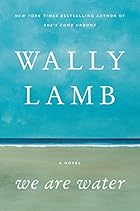
Review: We Are Water by Wally Lamb


I was not familiar with Wally Lamb’s writing before I read this novel. It came to me as one of the books long-listed for the Maine Readers Choice Awards, and it blew me away. The subject matter is not pretty, and is bound to make some readers uncomfortable. The characters are so well-portrayed however, that the reader is able to understand all the complex motivations that drive the players in the story.

Orion Oh is a psychologist on the staff of the local college. Married to Annie Oh, for over 25 years, they are the parents of twins Arianne and Andrew and another daughter Annie is an eclectic artist whose work often demonstrates an internal anger. She has gradually moved out of the family house in Connecticut to live in New York As the story unfolds, we gradually become aware of Annie's fractured childhood background which definitely impacts her adult actions. In the meantime, the now adult children are coping with their own coming of age difficulties while processing their mother’s choice of lifestyle and what they perceive as their father’s being abandoned by her.

The new bride, a high visibility art gallery owner, is quite assertive and is determined to have her wedding be one of the social events of the year. They are marrying in CT since same-sex marriage has, at the time of this story, not been approved in NY where the couple reside.

As the story progresses, each chapter presents a different character’s perspective, both about the upcoming marriage and also a retrospective glance back to the earlier years of the marriage and their own childhood. The past life experiences (especially regarding Annie's behavior) that influence the characters sneak up on the reader, and unexpectedly explode in a devastating scene of powerful emotions.

Without much of a spoiler, it seems that the children were traumatized throughout their growing-up years by actions of their mother who in turn has unresolved issues from her mother and younger sister's death in a flood; the children never thought to tell their father, and the father-busy with his professional life-was blind to what was happening in his own home to his own family. He is horrified when he realizes what may have happened and how that impacted his now grown children.As the family members gather back in the Connecticut home town to attend the wedding, emotions boil over, memories are triggered, and disaster seems inevitable.

I’m normally not a fan of epilogues, finding them often a tack–on that detracts from the reader’s assimilation and interpretation of the details. In this instance however, the epilogue could just as easily have been titled as another chapter giving the reader a glimpse into the future of the main characters. I found it fulfilling to be able to see how these lives played out, even though the scenarios were different from what I might have imagined or hoped for.
This is a powerful book that delves into very timely issues with compassion, and non-judgmental understanding. It does not sugar-coat unpleasantness, but neither does it make choices for the reader about the correctness of individual actions. It’s a well-researched, well-constructed story of life today, and one that will certainly be a popular choice for book discussion groups in the future.

Title: We Are Water
Author: Wally Lamb
Publisher: Harper (2013), Hardcover, 576 pages
Genre: Literary fiction
Subject: Gay marriage, child abuse
Source: Review copy from publisher
Why did I read this book now? Long-listed for Maine Reader's Choice Award

Monday, January 27, 2014

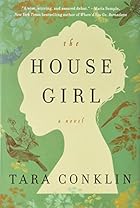
Review: The House Girl by Tara Conklin

Tara Conklin intertwines the story of two women: Josephine Bell, a Virginia house slave who in 1853 is trying desperately to escape to freedom and Lina Sparrow, a New York attorney looking for a plaintiff to serve as "lead plaintiff" in a class action suit in 2004  to compel the payment of reparations for descendants of slaves. The story is hung together by the discovery of some artwork that is thought to have been painted by Josephine Bell although heretofore attributed to her white owner.

The slave story is by far the more compelling.  We read of harsh treatment, unsuccessful escapes, and finally her "trip" on the Underground Railroad.  The characters are well-drawn, believable, and the story hangs together beautifully.  The reader is emotionally drawn into the life of Josephine, given insight into the extreme conditions slaves endured both in captivity in the south, and throughout the ordeal of the escapees.

Lina's story on the other hand is a bit sparse.  I found it difficult to relate to this young woman who seems to have no backbone in her job, whose researching skills are lacking and who seems to be on the receiving end of several fortuitous happenings.  I couldn't quite figure out if the plaintiff she was pursuing was also meant to be a romantic interest, and I found the whole reparations story a wee stretch, as did the plaintiff.  The story of Josephine and her paintings carried the book.  The platform of the reparations case was quite unsteady, and the ending really left me hanging.

Overall, the book is still worth reading if for no other reason than for the clear picture of slave life and the hopelessness of their situation.  Reparations may be called for.  I just wish the author had made a better case for them, and found a more convincing plaintiff and built a more persuasive case.

Title: The House Girl
Author: Tara Conklin
Publisher: William Morrow (2013), Hardcover, 384 pages
Genre: Historical fiction
Subject: Slavery, Underground Railroad
Setting: Virginia 1853, New York 2004
Source: Review copy from the publisher
Why did I read this book now? It was on the long list for the Maine Reader's Choice Award
Saturday, January 25, 2014

Review: Ten Things I've Learnt about Love by Sarah Butler


I'm a list maker, so I was drawn to this one.  Sarah Butler has woven together two stories that are seeminly unrelated. Alice is a vagabond young woman called home because her father is dying.  Daniel is a homeless gentleman who makes beautiful art objects from various trash and discarded objects he discovers on the street.

The chapters alternate between their two stories, and each begins with a list that gives the reader a glimpse into the psyche of each of them.  The stories tell of loss and hope, of love and emptiness, and the parallels of the two draw closer as the book proceeds.  It is a beautiful, thought-provoking, and poignant story and I don't want to say too much to spoil its special ending.  The reader sees the corresponding story lines, sees the characters as their lives continue side by side but not connected, and wants an ending so badly that the book cannot be put down.

The ending is beautiful, tearful and very special.  I'm so glad I read it, and wish I could say more, but it would be absolutely sinful to spoil it for you.  Go get a copy.

Title: Ten Things I Learnt about Love
Author: Sarah Butler
Publisher: Penguin Press (2013), Hardcover, 320 pages
Genre: Literary fiction
Subject: Loneliness, hope
Setting: London
Source: Review copy from the publisher
Why did I read this book now? Long list for Maine Readers' Choice Award

Thursday, January 23, 2014

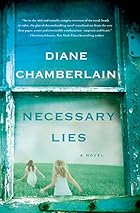
Review: Necessary Lies by Diane Chamberlain


I had no idea what this was really about when I received the review copy from the publisher. Then I found it on my "hafta read" pile for the Maine Reader's Choice Award panel. I hesitate to call it a delightful surprise since the subject matter, Eugenics, is one that is deeply controversial and ugly.

Evidently, in the US, several states had Eugenics programs in place allowing them to sterilize certain institutionalized citizens deemed unsuitable for procreating for a number of reasons, e.g., epilepsy, mental retardation, etc.  In North Carolina, the setting of this story, social workers were allowed to recommend this procedure on clients who were members of the general population without their residing in an institution.  Often they were simply poor, undereducated, and malnourished.

In the story, we follow Jane Forrester and Ivy Hart.  Jane is an upper middle class college graduate, recently married to a pediatrician who does not want his wife to work.  Jane has different ideas, wanting to have some sort of career before settling down to staying home to raise children.  She is hired as a social worker in North Carolina in the early 1960's.  Ivy Hart is one of her clients, a 15 year old girl who is trying hard to be a caregiver to a diabetic grandmother, a mother to her slightly retarded older sister and the sister's child "baby William" all the while trying to stay in high school and be the first in the family to graduate.

The poverty of the Hart family is thoroughly depressing and would crush the spirit of just about any normal person.  Ivy, with encouragement from Jane, is determined NOT to allow herself to become pregnant, and at the same time is doing everything she can to be sure that her sister, who is known to be quite promiscuous, does not have another child.  The social services department for whom Jane works, is determined to sterilize both girls.

Jane finds herself in the middle of a moral dilemma trying to help Ivy, obey her boss, and placate her husband while keeping him unaware of the specifics of her job.  As the timeline becomes more critical, Jane is forced to make decisions that will have a definite impact not only on her clients, but also on her own future.

This is a true page turner.  The characters are real, believable, and the story is horrifying in its implications.  The author has done significant research to present us with an in-depth look at the unbelievable options that actually occurred in this country just 50 short years ago.  It is a must read.

Title: Necessary Lies
Author: Diane Chamberlain
Publisher: St. Martin's Press (2013), Hardcover, 352 pages
Genre: Historical fiction
Subject: Eugenics, social services
Setting: Rural North Carolina, 1960
Source: Review copy from the publisher.
Why did I read this book now? It was on the long list for the Maine Reader's Choice Award
Wednesday, January 22, 2014

A new series for Tutu: Joe Ceepak mysteries


Back in December I got hooked on a new detective series.  I needed a break from all the serious literary fiction I was reading for the Maine Reader's Choice Awards. I had several Audible credits to spend, and several of my LibraryThing friends recommended these. I'm hooked. The Joe Ceepak mysteries are fun fun fun---great characters, good plots, terrific setting - The Jersey shore. So far I've read the first 4 - waiting for the next batch to go on sale!

Joe is a straight arrow police officer with an unshakable code of honor that broaches no lying, cheating, or allowing anyone else to lie or cheat.  He's recently returned from Iraq/Afghanistan service as an MP. Like most vets, he brings some baggage (like not wanting to drive the squad car because of an IED incident).   He is paired with a smark-aleck college grad "summer cop" Danny Boyle who has much to learn about policing, resents not being allowed to carry a gun, but who deeply admires Joe Ceepak and his code of honor. Ceepak in turns develops an abiding admiration for Danny's abilities and a team is formed.

The mysteries all take place in a Jersey Shore town full of amusement parks, boardwalk attractions, and restaurants of dubious culinary merit. They are some of the best fun I've had reading in a long time. Good cop stuff but not so grimy and heavy that I come away depressed. These are definitely "try 'em, you'll like 'em" kinda stuff. The characters are well drawn in the first volume, but Grabenstein progresses in each new story with a deeper sketch of each, and with new character to enhance the group.  There are nine of these so I'm sure to be reading more.

Tuesday, January 21, 2014

2013 Reading Recap - FINALLY!!!

I had a fabulous reading year in 2013. Much of my reading was devoted to Literary Fiction as part of my membership on the Maine Readers' Choice Award Committee. There are 20 people on the committee and we were divided into teams of four- each team was then assigned 25-27 books to read. From those we had to select two to move forward to the next round.  We had 3 top ones, but were able to decide fairly easily about #2.  There were several books though that I could easily have advanced to the next level. 

You'll note in my stats that the numbers don't always add up. Often I read a book in more than one format - hard copy and audio being the usual, although I've been known to ebook and audio a couple.

My total for 2013 was quite a bit lower than previous years, but care-giving does not leave one much energy for reading or even listening.

Titles completed 115
Print 42
Audio 58
Ebook 18

Fiction 103
Nonfiction 12

Mysteries 51 (my favorite genre)
ARC 25
MRCA 22 (some of these were finalists from last year)
Abandoned 18 (several of these were MRCA books!!!)

From the library 54


It's impossible for me to pick any one book of the year as THE BEST, but since I LOVE mysteries, I will start by declaring

The Best Mystery of the Year: How the Light Gets in by Louise Penny. 

Best Fiction Reads (in no particular order) and not necessarily published in 2013 - just when I read them.  

The Golem and the Jinni by Helene Wecker
Benediction by Kent Haruf
Sparta by Roxana Robinson
The Signature of all Things by Elizabeth Gilbert
A Land More Kind than Home by Wiley Cash (winner of last year's MRCA)
The Dinner by Herman Koch
We Need New Names by NoViolet Bulawayo
The House Girl by Tara Conklin
Necessary Lies by Diane Chamberlain
The 100 Year old Man who climbed out the window and Disappeared by Jonas Jonasson

Best Non-fiction Reads

Sound of A Wild Snail Eating by Elizabeth Tova Bailey
Testament of Youth by Vera Brittain
American Nations by Colin Woodard (a re-read for my book discussion group - even better the 2nd time)

I'd be hard pressed if I had to choose one of these as my best choice...they are all worth your time.  Enjoy your reading year, and please stop by often.  I'll try to stay more caught up now that I'm back in snowy, stay at home for the winter land.

Monday, January 20, 2014

Just a tad behind....

Well since the month of January is over 1/2 gone, I guess it's time to try to catch up. As many of you may know, we've had some challenges with my 89 year old Mom who lives 620 miles away in Baltimore, so I haven't had as much reading time as I'd like. Mom fell and broke her pelvis just before Thanksgiving and was doing really well getting back to reasonable mobility when she fell again just after New Year's and broke her wrist - this time requiring surgery.  It's a bit difficult using a walker with your arm in a cast. 

Thankfully she has four daughters who have all pitched in to take turns helping out.  I spent about 10 days with Mom starting New Year's Eve, and finally got back to Maine just last week.  The surgery seems to have gone well (she's scheduled to have the stitches and cast removed today) and with lots of helpers and therapy, she hopes to be able to resume her independent life in another 6-10 weeks.

I have about 10 books waiting for reviews, and I'll be working on those for the rest of this week.   I also have several ARCs waiting and a blog tour for February for one of my favorite new authors -Wiley Cash, whose book The Dark Road to Mercy is scheduled for publication next month..

I'm still deciding whether to stay on the Maine Reader's Choice Awards panel to judge books published in 2014. We're finishing up the long list for 2013 books and will announce the short list in early February. We actually won't be finished the 2013 selections until this summer.  My team has finished reading and selecting from its batch of 27 and some of those will be among those reviews to be posted here in the next few weeks.

I'm resigning my librarian job at the end of my term, so as of April 1st, I'll only be involved in the monthly book discussion group, and the Friday Mah Jongg gang. 15-20 hrs/week as a volunteer is getting to be a bit much for this chronologically advantaged lady.  Too much going on to do justice to the job.

I'm not setting any 2014 reading goals. I plan to read whatever falls into my hand, or shows up on the shelf at the library. I have over 302 books in my current TBR collection, and there are over 4000 books residing in this house, (and several 100 others on the Nook and/or Kindle) so I'm sure I'll be able to find something to read. This may even be the year I get some of it organized.

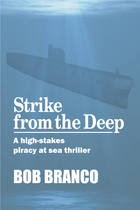
This year Bob and I hope to do some traveling. He's not running for re-election for town selectman so he can concentrate more time on writing the next book about Jason Stewart the sea Captain from his book Strike from the Deep. Whether it will get published (if and when he finishes it) is a question of luck and  money.   I'm still planning to do a giveaway to get 2014 sales off to a good start, so stay tuned.  We really want to get to Quebec this summer to do the Gamache mystery tour, and visit some old friends in the New England area.

I even hope to get my Great Blue Heron needlework done!

So darlings welcome back to Tutu's unmitigated mess - just remember that dull women have immaculate homes/desks/lives/threads and I have never been accused of being dull.

Thursday, December 26, 2013

Happy Boxing Day


Any excuse for another holiday is good for me! Enjoy all the leftovers!

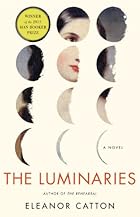
Review: The Luminaries by Eleanor Catton

 The publishing blurb says: It is 1866, and young Walter Moody has come to make his fortune upon the New Zealand goldfields. On the stormy night of his arrival, he stumbles across a tense gathering of twelve local men who have met in secret to discuss a series of unexplained events: A wealthy man has vanished, a prostitute has tried to end her life, and an enormous fortune has been discovered in the home of a luckless drunk. Moody is soon drawn into the mystery: a network of fates and fortunes that is as complex and exquisitely ornate as the night sky.

Richly evoking a mid-nineteenth-century world of shipping, banking, and gold rush boom and bus,
The Luminaries is a brilliantly constructed, fiendishly clever ghost story and a gripping page-turner. It is a thrilling achievement for someone still in her midtwenties, and will confirm for critics and readers that Eleanor Catton is one of the brightest stars in the international writing firmament.

Winner of the 2013 Man Booker Prize, this is a difficult book to get one's brain wrapped around.  It is dense, lengthy, and gimmicky,  often leaving the reader wondering when the story would ever pick up.  There are at least 15 major characters deeply involved in a mystery.  The mystery itself is revealed only as the story goes along.  The reader has to decide was there a murder?  If so, where is the body, and who committed the crime?  If not, then is there simply a missing person?  Why is he missing? where did he go?

As each player in the mystery tells and re-tells the story from his or her various perspectives, it becomes somewhat repetitive and is only tolerable because there is enough new/extra material revealed to keep tantalizing the reader to continue with the story. However, it wasn't until I got to page 600+ that I felt invested enough in the story to want to complete reading the book. At 848 pages, it requires a serious commitment of time, and is not easily read in short clips.  Often I found myself having to backtrack to refresh pieces of the story I hadn't yet committed to memory.

It is certainly a complex book, with layers of meaning, and a unique structure.  Catton frames the story on an astrological chart that is meaningful only to those who are conversant with the science.  To others, the use of this device is distracting and actually detracts from the story by making the reader feel the need to either ignore the astrological allusions and ponder what he might be missing or constantly take the time to go look up the references and lose track of the story itself.  I also felt the characters were not as strong as I would have liked.  Several were two-dimensional, and needed more development.  It would have really helped to know more about the motivations of those involved.

Overall I enjoyed the book, and felt it was worth the effort, but I know that I will have to read it again to see everything I know I missed.  This would actually be a book I would expect to be discussed, dissected and scrutinized at length in a graduate level English literature course.  Not for the faint hearted, but definitely worth the trouble for anyone who enjoys a good mystery or who is interested in the setting or time period. I also listened to portions of the book read by Mark Meadows.  The audio was published by Audible LTD.  I bought the audio copy for my own library.

Title: The Luminaries
Author: Eleanor Catton
Publisher: Little, Brown and Company; First Edition, 848 pages
Genre: Historical fiction
Subject: Astrology, , New Zealand gold rush
Setting: Hokitika New Zealand
Source: Review copy from the publisher
Why did I read this book now? It's on the long list for the Maine Reader's Choice Award
Wednesday, December 25, 2013

Monday, December 23, 2013

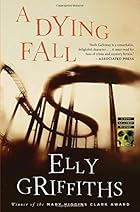
Review: A Dying Fall - Elly Griffiths


The publisher tells us this:
Ruth Galloway is shocked when she learns that her old university friend Dan Golding has died tragically in a house fire. But the death takes on a sinister cast when Ruth receives a letter from Dan written just before he died.

The letter tells of a great archaeological discovery, but Dan also says that he is scared for his life. Was Dan’s death linked to his find? The only clue is his mention of the Raven King, an ancient name for King Arthur.


I love this series but wonder if Griffiths is getting bogged down (pardon the pun if you're familiar with the series). Ruth and/or Harry need a big push to get something more going in these tales of old bones, single moms and skittish fringe friends.  While the mystery plot on this one was more linear than some of the earlier volumes in the series, it also felt flatter.  There were moments when I thought that Griffiths was actually trying to develop her main characters, and we certainly got more introspection scenes with Harry, but it still fell a bit flat. 

Although this one isn't as satisfying as previous episodes, I'll definitely check out another in the series when it appears in another year or so. Readers who enjoy this series have too much invested in these characters and Ruth's forensic paleontologist career to leave it dangling here.

Clare Corbett's narration is delightful.  She manages the many dialects and accents of various characters so well, that the listener instantly recognizes who is speaking.  Not only does she get the accents correct, but she manages to infuse her voice with an excellent rendition of the individual's personality. 

Title: A Dying Fall
Author: Elly Griffiths
Publisher: Quercus Publishing audio 2013
Narrator: Clare Corbett
Genre: Mystery (forensic detectives)
Subject: identity of ancient bones
Setting: Norfolk UK
Series: Ruth Galloway Mysteries
Source:  my own shelves (audio book)

Friday, December 20, 2013

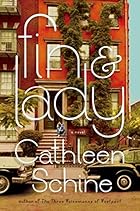
Review: Fin & Lady by Cathleen Schine


A surprise - one of my required MRC long list books. Slow take off, but I  found that once launched, I couldn't put it down. Quietly spell-binding. Not a barn burner, but deep, multi-dimensional character development driving a mundane plot.

The story has all the elements of a stereotypical quirky beach romance, but it manages to rise above the chick-lit level by having the story narrated by an 11 year old orphan Fin who goes to live with his uber-bohemian older half-sister Lady after his mother dies.  He is forced to leave his beloved farm in Connecticut and learns to fend for himself under Lady's benign neglect.   The story is a gentle, charming and bitter-sweet tale of his coming of age living part time in Greenwich Village and on an island off the coast of Italy, while  Lady decides whether to marry as she goes through a succession of male companions trying to choose a mate from among them.

The surprise ending brings the story full circle. I don't want to spoil it for you.  A delightful and satisfying read.  Many thanks to the publisher for the review copy.

Title: Fin & Lady
Author: Cathleen Schine
Publisher: Sarah Crichton Books (2013), Hardcover, 288 pgs
Genre: Literary fiction
Subject: sibling relationships
Setting: Greenwich Village; Capri, Italy
Source: Review copy from publisher
Why did I read this book now? It's being considered for the Maine Reader's Choice Award.

Wednesday, December 18, 2013

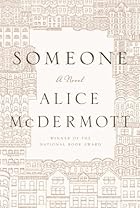
Review: Someone : A Novel by Alice McDermott

Here's another definite candidate for consideration for jumping to the next level of the Maine Readers Choice list: Someone, A Novel, by Alice McDermott.  Suffice it to say, this lady can take an absolutely ordinary woman, put her in a dull and lackluster setting, throw in a handful of nondescript characters and spin pure gold as the story of her life. Somewhat slow starting, but at only 231 pages, definitely worth the time spent. It's absolutely mesmerizing, and difficult to review.  The whole time I was reading it, I kept waiting for something exciting to happen, and then suddenly had that "AHA" moment when I realized that the excitement comes from the blessings of the ordinary.  McDermott certainly deserved a National Book award for this one. Short, sparse, spectacular. Would make a great christmas present.

Title: Someone: A Novel
Awards: Longlist for National Book Award 2013
Author: Alice McDermott
Publisher: Farrar, Straus and Giroux (2013), Edition: First Edition, Hardcover, 240 pages
Genre: literary fiction
Subject: one woman's life
Setting: Brooklyn
Source: Review copy from the publisher
Why did I read this book now? It's was on the long list for the Maine Reader's Choice Award.

Monday, December 16, 2013

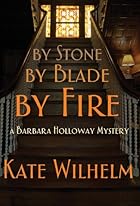
Review: By Stone, by Blade, by Fire by Kate Wilhelm

I've now read all the Barbara Holloway Mysteries.  This latest is every bit as intriguing, convoluted and engaging as earlier ones in the series.  Barbara Holloway, maverick defense attorney reluctantly takes on client Travis Morgan  after

  ..two witnesses swear they saw Travis Morgan walk into his father's house and shoot the man at his desk. Although he admits to a passionate hatred and fear of his father, a fundamentalist preacher, Travis swears he is innocent. Barbara Holloway believes him, and as she investigates, the case explodes into a dangerous conspiracy, causing Frank, Barbara's father and part-time associate, to hire a bodyguard to protect her.  (So says the publishing blurb). 

Much of this episode is similar to earlier entries in the series: Barbara still gets obsessed with her clients and neglects not only her health but her relationships with partner Darren and her father. There are still enough red herrings thrown in to keep the reader guessing well into the story not only about the murder but all the clues and issues needed to be developed to resolve the story.  Barbara's ageless and charming father Frank, the irrascible PI Bailey, and bubbly perky brilliant associate Shelley are still here, and seamlessly woven into another great courtroom drama.  It is particularly intriguing with its focus on the veracity of eye witnesses. 

I especially enjoy these in audio format. Carrington MacDuffie's narration is perfect for the personalities portrayed.  Let's hope Wilhelm has some more adventures for this intrepid attorney tucked away.  I can't wait.

Title: By Stone, By Blade, By Fire
Author: Kate Wilhelm
Publisher: Blackstone Audio, Inc. (2012) 
Narrator: Carrington MacDuffie
Genre: Courtroom drama
Subject: Clearing an innocent man; veracity of eyewitnesses
Setting: Oregon
Series: Barbara Holloway novels #13
Source: public library download
Why did I read this book now? I needed a good mystery as a break from heavy literary fiction.


Sunday, December 15, 2013

It's Snowing! Great glee and perfect reading time


I don't remember where I came across this graphic, but I've been saving it for today. Our first true snowfall is here, the Tutu family's wood pile is stacked, the slow cooker is wafting delicious aromas of a good hearty beef stew, Christmas cookies are in the oven, candles and batteries and bottled water are at the ready.  I'm primed for several uninterrupted hours of reading and writing some long overdue reviews. And if the plow guy can't get here, then I'll just have to skip that holiday party out on "the island", and miss choir practice tonight.  I may even be able to finish three books I have going at once. Just check my sidebar to see what's in my pile.  But at least, it really feels like Christmas is getting close. 

Stay warm and safe all.

Saturday, November 16, 2013

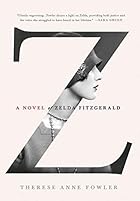
Review - Z: A Novel of Zelda Fitzgerald


Zelda Fitzgerald can certainly be viewed as one of life's tragic characters, coming of age in the post-war period of the 1920's, under the spell of the rakish F.Scott Fitzgerald, with booze and fun aplenty, and without quite enough backbone to acknowledge how tragic her life was becoming or wanting enough to do anything about it.

Fowler's fictional portrayal of her is certainly kinder than real life probably was.  And this is the reason that reviewing this book is so difficult.  If one has read any biographies of the principle characters (F.Scott, Zelda, Hemingway-both Ernest and Hadley), it is difficult to find oneself, as a reader of fiction, having as much sympathy for the character painted here as the author does.

Zelda is depicted as a good time girl whose passion is ballet (although she studied as a young girl it is hard to believe that she suddenly decided as a married woman in her late 20's to pursue this as a career).  I wondered the whole time I was reading about her dancing antics if the underlying motivation wasn't just a way of thumbing her nose at her husband's wanting her to stay focused on HIS career.

The travel scenes of Paris, Italy, Hollywood and Florida are quite similar to what we see in any bios of the players.  It was an OK read, fun if you've not read anything about the lady, but the caveat to any reader is that IT'S FICTION and it's hard to separate what might be fact from fairy tale.  It's well written, and certainly exhibits a very sympathetic view of Ms. Fitzgerald.  I just couldn't get excited about Zelda's life from reading it here.  I'd be interested to see if Ms. Fowler can write some fiction without having to center it on real life.  She writes well, and I'd love to see what else she can do.

Title:  Z:A Novel of Zelda Fitzgerald
Author: Therese Anne Fowler 
Publisher: St. Martin's Press (2013),  Hardcover, 384 pages 
Genre: Historicial biographical fiction
Subject: Zelda Sayre Fitzgerald
Setting: all over the world
Source: Review copy from the publisher
Why did I read this book now? It's was a long list nominee for the Maine Reader's Choice award.

Tuesday, November 12, 2013

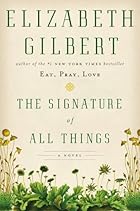
Review - The Signature of All Things

Title: The Signature of All Things
Author: Elizabeth Gilbert
Publisher: Viking Adult, 2013, e-galley
Genre: Historical Fiction  
Subject: Women's roles, botany  
Setting: England, high seas, South Pacific, Philadelphia PA  
Source: e-galley from the publisher  
Why did I read this book now? Reviewing for consideration for the Maine Readers' Choice Award.

This lovely book has been sitting in my "awaiting reviews" queue for almost a month. Although I have not been a big fan of previous Elizabeth Gilbert books, this one changed my mind. Her gentle, well-researched, and charming story of Alma Whittaker gives us a clear and perceptive look into the Age of Enlightenment and its interest in botany and its attitudes toward women. Alma is well-educated and shows us the world of gardening, plants, art, publishing, and exotic flora world-wide.

Alma's character is one that invites us to look at  early 19th century women in a new light. There are also other women of note in the story: her mother Beatrix, who is portrayed as a strong women with many talents, well educated and speaking several languages, but who is still often subservient to her husband, and who does not show her daughter any warmth or what we think of as motherly nurturing. She is raising a future botanist, a successor to herself (as it turns out) and is determined not to allow any feminine "weaknesses" to emerge in her daughter. There is Alma's adopted sister Prudence, raised in the same mold as Alma, and also not receiving (or giving) any warmth or friendship towards her sister. In the background is her mother's maid, Hanneke, who is always there to provide what little warmth Alma can expect from life, w.hile still maintaining her mistress Beatrix' stiff upper lip.

Her father, Henry Wittaker, is self-made man who has emigrated to American in 1776 after sailing the world with Captain James Cook.  Henry is a strong and central character throughout the story. In fact, Gilbert sees him as so significant that she devotes the first four chapters of the book to filling in his background and life motivations to show how they influenced his daughter's upbringing.

From the first though, the reader is drawn to Alma. She's not beautiful but she's brilliant, talented, stubborn, inquisitive, and determined to learn as much about the world of botany as she can. As she goes through life, she marries, separates from her husband, finds her true calling the in the world of mosses, cares for her widowed father, and finally, sails the world in search of her heart's dream. It's high drama, but every bit of it is believable. It's scientifically detailed, but it's gripping and easy to understand and enjoy. It's a romance, but it's certainly no bodice-ripper. It's historical fiction, and as such, it serves up a delicious slice of life during the age of high seas adventures, far-off lands, and life before the industrial revolution.

As I was finishing my draft of this review, our local TV station  - WCSH6 in Portland Maine - had an interview with Elizabeth Gilbert, where she describes the book as "Pride and Prejudice" meets "Master and Commander."  On their website they posted the "share" code for all to see. (I apologize for the 10 second commercial at the beginning of the clip.) It was a fun interview recapturing the charm I felt reading the book. It's a read I'm more than glad I finished, and one which I'm looking forward to reading again in the future. The e-galley was given to me by the publisher, Viking Adult, for review as one of the long listed books for the Maine Readers Choice Awards. It is certainly one I'm considering for nomination to the short list.
  Many thanks to Viking for making the review copy available and to WCSH6 for sharing the video.

Monday, November 11, 2013

Veteran's Day

Today November 11th is a day when we're supposed to stop and reflect on the service and sacrifices our friends, relatives and fellow countrymen and women have made on our behalf in military service down through the years and around the world.  Here are some of my family who have answered the call over the years.


From left to right...My Great-grandfather, Charles G. Blaney, who served as a Bosn on the USS Dixie during the Spanish American war. Bob's father Sgt Manuel Branco, who served with Patton during WWII, my father Warrant Officer Martin Yannuzzi, who served in the Merchant Marine during and after WWII, and my sweet hubbie, Ensign Bob Branco,here in this picture aboard the USS Forrest Sherman in the Mediterranean Sea during the Arab-Israeli war of 1967.

With this many connections, I had to join up, so here's Tutu with her parents in August 1966 for my commissioning as an Ensign in the Navy.  This was during the Vietnam War when I served as a personnel officer at the Naval Schools Command in Newport RI.


Wouldn't it be wonderful if our children - and those in every nation around the world -  never had to join the military or fight in wars?  We can only pray and work just as hard for peace as we did to win wars.

Veteran's Day blessings to all who have served, are serving now and will ever answer the call in the future.

Friday, November 8, 2013

Strike from the Deep-- Veteran's Day Special


Mr. Tutu (AKA Bob Branco)  is off to the New England Crime Bake this weekend, so Tutu has a few days of uninterrupted reading ahead.  I may even get some time (or mental energy) to finish up about four reviews that are awaiting to be written. 

In the meantime, I'm gathering some unbiased reviews for Strike From the Deep to post here next week in connection with a giveaway I'll be sponsoring.  I'm not sure I can be unbiased as a reviewer, so I'll let others speak.  I do confess to having a secret crush on the main character Captain Jason, but we won't tell Mr. Tutu about that.


Both Bob and I are Navy veterans, (this snap is definitely from our YOUNGER days) and he's decided to celebrate the Veteran's day weekend by offering the Kindle e-book version of Strike From the Deep as a free download today thru midnite (PST) Sunday. You can get your free download (no Kindle needed) by clicking here.

So download away all you faithful followers, and enjoy a thrilling adventure on the high seas. Many of our friends who have read the book say it's even more exciting than the Tom Hanks movie that's playing right now.

To all my fellow veterans - may you enjoy your weekend and know that we're both thankful to have served after, with or before you. It's a wonderful country, and one worth fighting for.

P.S.  Autographed print copies can be ordered from the website - www.bobbrancoauthor.com 


Wednesday, October 30, 2013

We need New Names by NoViolet Bulawayo

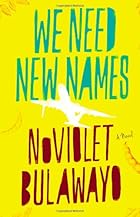
NoViolet Bulawyo's debut novel landed her on the short list of finalists for the 2013 Man Booker prize.  It also landed on the list for consideration for the 2013 Maine Readers Choice award. We Need New Names is a fictional account that has large elements of autobiography.  Told in the first person of a young girl named  Darling whose wonderful assortment of family and friends in her native Zimbabwe include Bastard, Chipo, Godknows, and her grandma Mother of Bones.  The preacher, Prophet Revelations Bitchington Mborro, proclaims from the top of a steep climb his flock must endure every sabbath before they can enjoy (or endure?) his prosyletizing posturing.  She paints a very realistic picture of life in Rhodesia (later Zimbabwe) and the pain the birth pangs of revolution imparted to everyday citizens: the hunger, the lack of privacy, lack of sanitation and education opportunities, and the disappearance of male family members who leave to go to work in the gold mines, often to return bringing no money but "the sickness" instead.

In the second part of the story, Darling manages to go to America where an aunt has agreed to sponsor her for a student visa in Detroit.  Her description of her first experience of snow is just one example of her exquisite descriptive abilities.  A sample from the chapter DestroyedMichygen:
What you will see if you come here (America) ...is the snow. Snow on the leafless trees, snow on the cars, snow on the roads, snow on the yards, snow on the roofs---snow, just snow covering everything like sand. It is as white as clean teeth, and is also, very, very cold.  It is a greedy monster too, the snow, because just look how it has swallowed everything;  where is the ground now? Where are the flowers? The grass? The stones?  The leaves? The ants?...As for the coldness, I have never seen it like this. I mean coldness that makes like it wants to kill you, like it's telling you, with its snow, that you should go back to where you came from. p.150
Is this one compelling enough to advance it to the next round? Maybe. It is certainly IMHO a compelling read, one that grabbed me and held me. In the end, it will depend on whether others are equally or more compelling. Ms. Bulawayo certainly deserves a good hard look.  I was grabbed, repulsed, horrified, entranced, amused and immersed from the beginning to the end. Did I like the subject matter? NO. Did I like the characters - not particularly, but neither did I dislike them.  Some are actually eccentric enough to be loveable.  This is a coming of age story that tells us not just the discouragements of her birthplace, but her disappointments when expectations of America don't quite fit her mind's picture.  As such, the brutality fits the realism of Darling's life.

Another note.  I also listened to large portions of this in audio format.  Narrator Robin Miles' melodic rendition of the dialect and names greatly enhanced my enjoyment of this story.  This is definitely an author to look for in the future. Many thanks to Reagan Arthur/Little Brown for making this review copy available.

Title: We Need New Names
Author: NoViolet Bulawayo (novioletbulawayo.com)
Audio Version Narrator: Robin Miles 
Publisher: Little Brown & Company, New York, 292 pages
Genre: literary fiction
Subject: coming of age in Zimbabwe
Setting: Zimbabwe, Detroit Michigan
Source: review copy from the publisher
Why did I read this book now? It's on the long-long list for the MRCA.

Saturday, October 26, 2013

Reading Respite

My apologies to all of my loyal followers for my less than hectic reviewing pace lately. I've been reading many books, most of them nominees from the long long list of possibles for the Maine Readers Choice Award of books published this year. They are all meaty reads, and require a good deal of my mental energy. Sometimes, they also are books that are just not grabbing me, and I find myself putting them aside when they'll only half-finished, because I know they're not going to make my cut. There are too many good ones waiting for me to spend time reading one that isn't my cuppa tea.

Then too, after reading a 500-600 page chunkster, I find my brain needs to be treated to something more cozy and relaxing. So I've been turning to re-reads of some of my favorites from the past. In addition there are the book club reads from our adult discussion group at the library. This month we're reading American Nations by Colin Woodard. I read this one back in 2011, and loved it. But it's so meaty that I'm doing a re-read so I can intelligently (we hope) lead the discussion just before Thanksgiving. And finally, there's quite a bit of marketing work going on for Bob's book, Strike from the Deep. I'll be running a giveaway before Thanksgiving, so stay tuned.

I do have four to review sometime here in the next two weeks including


So dear followers I hope you'll continue to drop by. The rest of the year promises some excellent reads for me - as you can see - these are the review copies that have found their way to Tutu's bedside bookcase. I think even if we get snowed in for weeks, I won't be lacking for something to read. Eventually, I promise, I'll give you at least a snapshot review of any that I finish.  As you can see, the bedside bookstand is full....Happy reading!

Tuesday, October 15, 2013

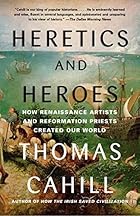
Review: Heretics and Heroes....by Thomas Cahill

The Hinges of History series has been one of my favorites since the first volume "How the Irish Saved Civilization" was given to me as a gift back in 1995. Since then, I've eagerly awaited a chance to dive into each new volume in the series. When Knopf Doubleday offered me a chance to review this one, I didn't hesitate to accept. I've had the galley since July, and have taken my time reading it, allowing Cahill's ideas and insights to bubble up, take form, and then slide into place in my world view of history.

Here's how the publisher blurbs the book:
In Volume VI of his acclaimed Hinges of History series, Thomas Cahill guides us through the thrilling period of Renaissance and Reformation (late fourteenth to early seventeenth centuries), so full of innovation and cultural change that the Western world would not experience its like again until the twentieth century. Beginning with the continent-wide disaster of the Black Plague, Cahill traces the many innovations in European thought and experience that served both the new humanism of the Renaissance and the seemingly abrupt religious alterations of the increasingly radical Reformation. This is an age of the most sublime artistic and scientific adventure, but also of newly powerful princes and armies, and of newly found courage, as many thousands refuse to bow their heads to the religious pieties of the past.  It is an era of newly discovered continents and previously unknown peoples.  More than anything, it is a time of individuality in which a whole culture must achieve a new balance, if the West is to continue.  
My impressions:

While he maintains a scholarly approach to the subject, Cahill writes in a conversational tone that immediately helps the reader settle into  the setting. We are simultaneously treated to a well-researched treatise on art, politics, and religion, their practices and motivations, ancient influences and contemporary thought  along with Cahill's insightful and often imaginative (dare I say sometimes even amusing?) interpretations. He examines poetry (and poets), drama (and playwrights), essayists (and writers), religious treatises (and the clergy and academics who wrote them), and military strategies and tactics (along with the popes, generals, and soldiers responsible), drawing out implications and conclusions I certainly would never have found on my own, no matter how much reading I did.

He uses his prelude entitled "Philosophical Tennis through the Ages," where he presents a very brief essay on the connections between the tag teams (my term not Cahill's) of Plato and Aristotle, Augustine and Thomas Aquinas, to set the stage for the enormous intellectual and cultural changes about to unfold in the world just emerging from the Middle Ages into the light of the Renaissance. He follows this with a discussion of Columbus, international trade, the growth of empires, and the budding of the Renaissance in Florence.

Next, he turns to the world of Renaissance artists expounding on the shift from Medieval piety to a more open appreciation of humanism. The finished book is planned to feature over 62 illustrative plates (I presume in color similar to the previous volume). However, my galley copy did not include these illustrations so it is difficult for me to comment on how well his explanations and descriptions confirm his conclusions. I have visited Florence and Rome, and had the opportunity to personally view about 10 of those works of art that I can specifically remember. I only wish I had had this book with me - I suspect I would have come away with a much deeper appreciation of what I was seeing! The book (and galley) also features 22 black and white illustrations that are well placed to demonstrate his points.

The final sections on the Reformation are my personal favorites. Having grown up in a household with one Roman Catholic and one Lutheran parent, I got a glimpse of religious belief, but my Catholic school background did not include any expanded discussion of Martin Luther other than to say that he was the blackguard who broke away from the church and founded the Lutherans. Cahill traces the beginnings of the reformation from before Luther beginning with a look at Erasmus and continues with a fairly developed picture of the condition of the politics of the day that drove the excesses Luther railed against. 

Then in a delightful  Intermission entitled "Il Buono, Il Brutto, Il Cattivo" (the Good, the Bad and the Ugly) A Portfolio of Egos"   he reiterates the central theme:
“As we, the children of the West, look back across our history, we can only be dismayed by the violent clashes that occurred in the period we are now considering.  There is a scholarly theory (as well as a popular variant of it) that monotheism itself is responsible for the violence, because the worship of one God—by Jews from ancient times, by Christians from the time of Constantine forward when they gained political power, and by Muslims almost from their inception—necessarily encourages intolerance of other beliefs.” (p. 187)
He recounts from Columbus expanding the horizons of the known world with a vision of what could be, from the artists expanding the horizons of humanity's vision of itself and branches out to other aspects of the time with the ugliness of perverted religious ideas and power grabs in Holy Roman Empire and beyond.  Here we get a taste of additional players in the reformation arena, and the intertwining of politics and religion that have become the hallmark of cultural clashes that continue to this day.

Through the rest of the book, he highlights how the invention of moveable type and the spread of printed material, along with the increased education and literacy of the populace, and the translation of written texts (particularly the Bible) played a significant role in setting the stage for future changes to come at an ever increasing pace.

Cahill does not interrupt the flow of his conversation with endless footnotes.  References are discretely side-barred in an exceptionally eye-pleasing format. There are extensive bibliographic notes at the end of the book, but even these are in an informal format that is more likely to draw the reader to further exploring than an academically rigorous list of carefully formatted "mumbledy- jumble".

Although I am a huge fan of audio books, this is one book that I don't think would work in that format.  It is a visual delight (and I'm sure will be even more so with the addition of the color plates).  As an e-book, it would really only work on a color reader, tablet, or screen.

Cahill's words are thought-provoking.  The entire work is a feast for the brain and the senses.  I can't wait until it comes out on October 29th because this is one I'm ordering for my personal library. And then...I'm going to start the whole series again from the beginning.  It's been too long between volumes.  A final volume is planned, but no title or pub date has been announced.  Let's hope it doesn't take as long as this one.

About the Author

Cahill is the author of five previous volumes in the Hinges of History series: How the Irish Saved Civilization, The Gifts of the Jews, Desire of the Everlasting Hills, Sailing the Wine-Dark Sea, and Mysteries of the Middle Ages. They have been bestsellers not only in the United States, but also in countries ranging from Italy to Brazil. His last book was A Saint on Death Row. His last book was A Saint on Death Row.

Title: Heretics and Heroes: How Renaissance Artists and Reformation Priests Created Our World
Author: Thomas Cahill
Publisher: Knopf Doubleday Publishing Group (Nan A. Talese imprint) 2013
Genre: History
Subject: Art, religion, politics, history of 13th through the mid 17th centuries
Setting: Europe 1282-1669
Series: Hinges of History, volume VI
Source: Bound galley from the publisher
Why did I read this book now? It's a series I enjoy and the publisher asked me to do a review.

Many thanks to Doubleday Knopf for providing the review copy. 

Wednesday, October 9, 2013

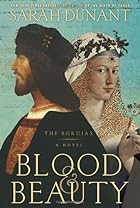
Review: Blood and Beauty by Sarah Dunant

In the historical epilogue to this lush novel author Sarah Dunant says
"More than many in history, the Borgias have suffered from an excess of bad press. While their behavior--personal and political--was often brutal and corrupt, they lived in brutal and corrupt times; and the thirst for diplomatic gossip and scandal, along with undoubted prejudice against their Spanish nationality, played its part in embellishing what was already a colorful story. Once the slander was abroad, much of it was incorporated into the historical record without being challenged. Spin, it seems, was a political art long before the modern word was introduced.
Subtitled, The Borgias, A Novel, this book is part of my reading list for consideration for the Maine Readers Choice Award.  It certainly is a worthy entry into the ring. While I had heard of the Borgias and their corruption over the years, I don't think I'd ever read anything that presented the story of this infamous family in such detail.  Certainly authors have leeway when writing fiction, and Dunant makes no claim to have us see this as a biography.  She has steeped herself in the history of the era, becoming as familiar as possible with source material, both fictional and archival.  Her previous books, such as Birth of Venus, In the Company of the Courtesan, and Sacred Hearts, have shown her mastery of the language, the customs, the politics and the scenery of the era but with fictional characters.  In this one, she tackles historical characters, treading carefully among the information available to present us with a plausible rendition of this well-known and oft-villified family.

Pope Alexander VI, born Rodrigo Borgia, ascends the throne of Peter after some intense backstage maneuvering.  He promptly makes his illegitimate son Cesare a cardinal at the age of 19, and begins marrying off his other children to various royal partners to form alliances to bolster his political ambitions.  This is a time when Italy was still not a unified country, existing instead as series of city-states, when the Holy Roman Empire was gradually disintegrating, when Spain's power was on the rise.  A Spaniard by birth, Alexander had to tread carefully through the politics of Italy, using the power of his office, as well as his love for his family to enhance his power, his wealth, and his ego.

His son Cesare, is a power hungry young man, well loved by all the ladies, unscrupulous in his relations with both church and state.  The world has been fed stories about Cesare's relationship with his sister Lucrezia, the Pope's only and very beloved daughter.  Dunant treats this relationship carefully, never allowing the undocumented rumors to overtake other possibilities.  Certainly the two were close, but here they are portrayed as being very politically astute siblings who are under the tight rein of their father the Pope. While they may have been pawns and playthings, the author is careful to also let us see the power these women held in the male dominated arena.

Dunant gives us a richly drawn portrait of the Pope, his off-spring, his enemies, his mistresses and relations, his offspring, his warts, his dealings with foreign countries, all the while showing us possibilities of humanity not often attributed to this family.  In addition, the customs, the fashions, and the history of the period are intricately described, taking the reader back to a time of rich but vile corruption, political perfidy, and horrifying treachery.

Historical fiction doesn't get much better than this. This is definitely Dunant's best work.  I read somewhere that there may be a sequel in the offing.  Let's hope so.  There's much more to this story that deserves a well-researched, objective, and humane look.

I also sampled a significant part of this one in audio.  Narrator Edoardo Ballerini does a stellar job of giving us the characters in different voices, accents, and attitudes.  The print copy includes an excellent family tree and map of the different political entities of the era, a definite plus for those of us needing a history refresher.
My thanks to Random House for making this copy available for review.

Title: Blood and Beauty:The Borgias, A Novel
Author: Sarah Dunant
Publisher: Random House (2013), Edition: First Edition, Hardcover, 528 pages Genre: Historical fiction
Subject: The Borgia Family
Setting: Italy at the turn of the 15th century
Source: review copy from the publisher

Friday, September 27, 2013

Review: Through the Evil Days by Julia Spencer-Fleming

Back in March 2011, I finished One was a Soldier - the book preceding this one in the series about Clare Ferguson and Russ Van Alstyne. After reading the closing line, I threw the previous book across the room yelling - "NO....you can't leave us hanging like this!"

30 plus months later, we are finally able to pick up the story.  All of us who are fans of this wonderful cast of characters have been holding our collective breath to see what's going to happen.  I really hate to give too much away so that readers who have not read the earlier books can have the fun of catching up before this one hits the bookshelves November 5th.

But it does pick up just where the last one ended.  So let's catch up a bit. Clare Ferguson is an Episcopal priest and an Army Air National Guard Helicopter pilot.  After she returned from a very stressful tour in Afghanistan,  her PTSD led to drug and alcohol problems, not to mention testy scenes with the love of her life, Russ Van Alstyne.  Russ, recently widowed Vietnam era vet, is Chief of Police of Millers Kill NY, where Clare's parish is located.  After a long and tumultuous courtship, they have recently married and are determined to have the honeymoon they about were unable to have during the previous book.  Russ has found the perfect place - about an hour out of town on a quiet lake, there is a rustic cabin for sale.  It has no electricity, no plumbing, no phone line, and a big frozen pond where he is going to teach Clare the fine art of ice fishing. He wants to buy it, and this is the perfect opportunity for them to check it out to see if this could become their hideaway retreat.  Clare reluctantly agrees to check it out. After all, they're both veterans of Army survival training, so what's the big deal about no power, running water or phone?

The big deal is that Clare is under pressure from her vestry to resign because of some transgressions (the cliff hangar from the last book) and Russ is facing the dismantling of his small town police force by the town council who claim the state police can provide coverage for much less money.  Neither tells the other about the impending axes about to fall.  Each figures that a week away from pressure will guide them to an answer.  Neither counts on the storm of the century isolating them so totally that the situation becomes extremely dangerous.  Neither counts on a seriously ill 7 year old being kidnapped back in Millers Kill while the police force is understaffed.  Neither counts on becoming entangled with a gang of drug dealers operating nearby.

The story of Hadley Knox and Kevin Flynn - members of the MK police force whose on again, off-again relationship is off at the beginning of the book- find themselves thrown back together as partners when they are assigned to lead the search team for the missing child.  This relationship has quietly developed over the last several books, and I found myself especially interested in seeing it blossom.  In fact, it is becoming as compelling as the Clare and Russ story.

Spencer-Fleming is a master at blending multiple story-lines, a fairly large cast of characters and a setting untamed enough to foster all kinds of evil doings.  This one does not disappoint.  It is fast paced, taking place over a short week that to the participants must have seemed like a year.  It has new characters arriving, old friends still there (although a few are more on the fringes with this one), and a very well plotted mystery with several "Wow,  where did that come from?" plot twists.

And now, in her usual white knuckle routine, Spencer-Fleming leaves us yelling at the end again.  "NO---don't leave it like this!!!"  Please Julia,  don't make us wait another 30 months.   At least we'll have time to read the whole series again.  They are definitely books that don't get old with re-reading.
Go pre-order.  If this isn't the best one yet, it's sure close to whatever is.


Sunday, September 22, 2013

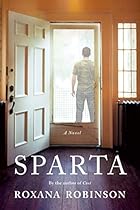
Review: Sparta by Roxana Robinson

 Last night, I finished a real hard cover print book which I read in about 48 hours. I very seldom have the physical strength to hold a book for that long, or the mental wiring to single-task and sit still for that lengthy a stretch, but Sparta: A Novel by Roxanna Robinson BLEW. ME. AWAY. I could not put this one down. I did not want to read another book about the Iraq war. I did not want to read anything else grim, dark, or depressing. But since it was one of my required reads for Maine Readers' Choice, I dove in and told myself to get it over with.

I can't begin to get my thoughts ordered enough to write this one the review it deserves, but I can sing its praises to the heavens. Have no doubt-- this is a meaty book, with a subject matter that many of us find distasteful, but it is an exquisite piece of writing...no extra words, no fluff, instead it's a bold, brazen, heart-wrenching look into an anguished soul; it's a panic attack-producing introspective view of what is happening to an entire generation of this country's (and maybe the world's?) young military aged people who have gone off to serve their country with high hopes of changing the world, only to return to a world they don't know, don't understand, and a world that doesn't seem able to understand them or help them cope with the traumas they've endured. They may come home in pieces physically, or they may return looking intact, but they are all fractured indelibly from what they've done, what they've endured, what they've seen and heard and smelled and experienced.

The story is about Conrad Farrell - New England upper middle class classics major in college, enamored of the ancient Spartans and the purity of their thoughts, who decides after graduation to do "something real.. something that will make a difference" by accepting a commission in the US Marines. As a Marine leader, he is responsible for his men, and goes off to Iraq to engage in the carnage that was Fallujah and surrounding area battles. When he returns after four years, he is irrevocably changed and unable to settle back into a world he no longer recognizes.
"You don't get it. I'd love to do this....Change. I can't. Something's not working. All you do is tear me apart. I'd like to be back here with you all, but I'm not. You don't get it. I'm not here. I'm not home. I'm still there." p. 348
His family (parents, brother, sister and girl-friend) are devastated when their efforts to understand are scorned, all offers of help are ignored or rejected, when they see him sinking further and deeper into non-functioning desperation and are forced to stand by helplessly. His inability to articulate his problems compounds the tragedy. The VA is not much help. (The book is set in 2006). His mother, a professional therapist, is particularly upset:
"I know what I'm supposed to do....I do it all the time as a therapist...but I can't do it with Con.  I can't do it.....I'm not supposed to reach out to him.  He doesn't like it.  I can see that.  If he were a client, I'd tell myself to stop....I'm too afraid.  I can't leave him alone....What kind of a therapist! What kind of a mother!  I can't stop."  p. 340


It should be required reading in high school, in college, at our military's officer training academies and War Colleges, and by all who are in the unenviable position of treating these returning veterans both physically and mentally. Ultimately, it's not only an indictment of our mental health care system, but of our national caring system, our national conscience, and the conflicted value system of leadership and patriotism.

Ultimately it's also a book about hope, and love, and caring, and never giving up.  Go get it, go read it.  It's definitely going to be one of my top five of  the year.

Many thanks to Sarah Crichton Books for making this available for review.

Title: SPARTA
Author: Roxanna Robinson
Publisher:Sarah Crichton Books (Farrar Staus and Giroux) (2013), Hardcover, 400 pages
Genre: Literary fiction
Subject: War trauma and mental illness
Setting: New York
Source: Review copy from the publisher
Why did I read this book now? It was given to me to review for the Maine Readers Choice Awards Committee.

Friday, September 20, 2013

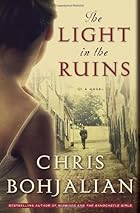
Review: The Light in the Ruins by Chris Bohjalian

 In the past, I haven't been a huge Chris Bohjalian fan, but this one has changed my mind.  The Light in the Ruins is a tightly written mystery story with two plots and two narrators.

There is the story of Italian partisans battling the Fascists in Tuscany, and of the Rosati family, demi-royals who lived on a huge estate with hundreds of acres of wine grapes and an ancient Etrucan burial ground and who were viewed by the partisans as collaborating with the Nazis.

Then there is the story of a  murder in Florence in 1955  (the first of several by a serial killer who is one of the narrators of the book.)  The police detective assigned to the case is Serafina, the first female detective ever to hold this position in Florence.  As it turns out, Serafina grew up near the Rosati family who now appear to be the target of this demented killer.

As Serafina tracks her prey, she must also relive her days as a partisan, including the agony suffered when she was critically burnt and left for dead.  The victims' family does not immediately recognize or acknowledge her, and she is drawn into the story of their cooperation with the Nazis in the hopes of maintaining their lives and property.

I found this tale fascinating:  the background and story of the struggles of the Italian people during WWII were eye-opening.  Although Bohjalian does not overwhelm us with tons of information, he manages to present enough to help the reader fix the situation in overall historical perspective, and to understand the sympathies both of the Partisans and the collaborators.

Background material aside, it is the unraveling of the story of Serafina that dominates.  Her gradual reawakening to what happened to her, to her understanding of how the Rosatis were involved in her past, and how her past holds the clues to solving the mysteries of the murders of two of the Rosati women.  Convoluted, intertwined, and thoroughly engaging, this story is a spectacular example of the art of writing historical mysteries that impart good history, solid plotting, interesting characters, and a gorgeous setting.

Title: The Light in the Ruins
Author: Chris Bohjalian
Publisher: Doubleday (2013), Edition: First Edition, Hardcover, 320 pages
Genre: Historial fiction
Subject: Italian collaboration with Nazis; murder
Setting: Florence, Tuscany Italy
Source: Review copy from publisher
Why did I read this book now? It's being considered for the long-list for the 2013 Maine Readers Choice Award
Tuesday, September 17, 2013

Review: The Cat by Edeet Ravel

Stunning.....absolutely stunning story. I almost didn't read this after scanning the jacket blurb:
Single mother Elise is devoted to her son; he is her world. But that world is shattered in one terrifying moment when her son is killed in a car accident. Lost, angry, and desolate, Elise sees no point in going on, and longs to join her son. But despair is not an option; Elise must stay alive to take care of her son's beloved cat, Pursie.
Already this wasn't working for me.  I seem to have been inundated with dark, depressing books in this batch we've been reviewing for the Maine Readers Choice Awards for next year.  In fact, one of my fellow reviewers quipped that "Grim is the new funny."  I hope she didn't really mean it!

This one is elegant, lean writing at its best.  There isn't a wasted word.  While the reader can feel and understand the torture that Elise goes through, and can become immersed in the struggle, the detached dreamlike quality of the narration keeps it from becoming too maudlin, too ugly, or too unthinkable.  Having Elise herself narrate what it happening, and letting her memories surface to explain how and why she is grieving makes this a beautiful tale.

The cat is the excuse Elise uses to continue on, but the feline never becomes the real story.  Had that happened it would have been a travesty.  Instead, the good kitty stays in the background, available when needed, but never pushing into the limelight.  As Elise goes through the first few months of her self-imposed isolation, she deals with the memories of her own childhood, her feelings toward her mother, her son's father, her previous lover, and her only childhood friend.  Each of these characters is described with just enough detail to fit in, but never intrudes on the story which is essentially Elise's.

Although it's set in Canada, the setting could have been anywhere.  The time frame is a bit more important because the isolation and communications issues are very much influenced and framed by modern day media and communications devices.

In the end, Ravel manages to leave the reader with a sense of hope without closing the door on any possibilities.  I wish she had been able to expand the ending a bit more.  It seemed almost to say  "OK, now here's a way to solve this mess, I'll leave it right here."  Disappointing perhaps, but then again, this young woman is never going to have her life wrapped up with a pretty bow, so leaving the future open is quite realistic.

Right now, this one is very near (if not AT) the top of my list for 2013.  Go get a copy.


Title: The Cat
Author: Edeet Ravel
Publisher: Pintail (2013), Edition: Reprint, Paperback, 240 pages
Genre: literary ficion
Subject: Dealing with grief
Setting: Northeastern Canada
Source: Courtesy copy from publisher
Why did I read this book now? It's being considered for the long-list of Maine Readers Choice Award for 2013 books.
Sunday, September 15, 2013

Lazy Sunday - Darning and Day-Dreaming


Tutu has not been doing a very good job of blogging lately.  It's not that I'm not reading, it's just that real life keeps getting in the way of writing reviews.  It's that glorious time of year when the days here in Maine are usually warm, the evenings crisp and cool, the harvest bounty is still plentiful, and we find ourselves already making plans for the fall.  Thus the book cover....

Fall brings back closed toed shoes and SOCKS.  In case you haven't noticed, the price of socks, along with everything else has gone through the financial ceiling, and the quality has fallen out the basement door.  In other words, those $7 a pair socks are lucky they last 7 wearings.  I used to just ignore small holes in socks (as long as they weren't visible to others, and then, when the holes had grown too big, I'd either keep them for wearing on hands for furniture dusting, or throw them out.  I even went through a phase where I pretended I was a very "with it" younger person and wore mismatched socks, telling anyone who stared they were a fashion statement.  That only lasted about three times.


Now I have a whole basket of socks, many of them among my favorites, all of which have mates, but none of which can be worn because they have holes in them.  For the past month, I've been on the hunt for an old fashioned darning egg-like the one seen here.  They seem to exist only in my memory or in museums these days.  I have decided to try the next best thing - a baseball bat- and plan to spend some time this evening working on at least one pair of socks to practice  darning techniques.

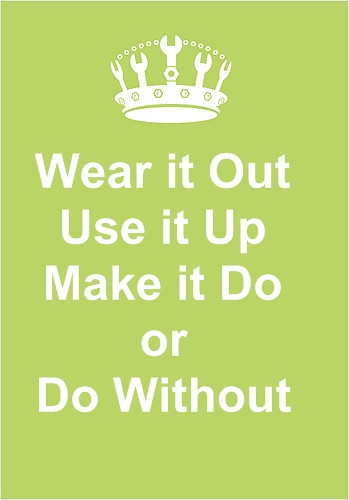
My mother was quite often heard to remind us when she was growing up after the Great Depression, and then through World War II, citizens were constantly reminded to use it up, wear it out, make it do or do without.  And I do remember someone in my family (grandmother, mother, aunt?) using a darning egg.  Or it may have been in Girl Scouts?  Maybe that's where I was exposed to the basics.  I've studied the videos and step by step guides on the internet, and have chosen a pair of my least favorites to use for practice.  So we'll see.

In the meantime, it's a lovely day for a walk, and maybe a listen to an audio book while I prep the peaches and pork chops for dinner.

Enjoy the autumn....get out and soak up the gentle weather, get the wood pile stacked and the vegetables put up.  Winter won't be far behind. 

Match up those socks and get them darned. 

Thursday, September 5, 2013

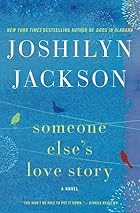
Review: Someone Else's Love Story by Joshilyn Jackson


Joshilyn Jackson just keeps getting better. This latest novel certainly exceeds the "southern fiction" genre label of her previous offerings "Gods in Alabama" and "BackSeat Saints". It's much more than just a chick-lit romance; it has a hint of mystery, and an assortment of men and women and relationships. As the title indicates, it's truly a story of relationships. The resolution of who is in love with whom and who will end up together is handled so beautifully that the reader doesn't even realize that these permutations of relationships exist until well into the story. As I read, I actually found I couldn't decide who should win the fair maiden's hand.

It's told as almost a series of small individual stories. The main character Shandi tells us her (almost) unbelievable story from the beginning in the first person. The story opens: "I fell in love with William Ashe at gunpoint in a Circle K." Then other characters' stories begin to emerge in the words of a neutral narrator. In addition to a love story, or several love stories, it is a story of friendship, of parenthood, and a tale of betrayal and forgiveness. There are plot lines about date rape, genetic research, and the power of suggestion.

This one is not going to be available until later this fall, but it would be a wonderful holiday gift for readers of southern stories, romance and good literary fiction. Put it on your list. It's going to be a winner.

Title: Someone Else's Love Story
Author: Joshilyn Jackson
Publisher: William Morrow (2013), e-review galley 352 pages
Genre: fiction
Subject: relationships; date rape; genetic research
Setting: Atlanta GA and surrounding area
Source: Edelweiss electronic review galley service
Why did I read this book now? It was available for review and I enjoy the author's works.

Tuesday, September 3, 2013

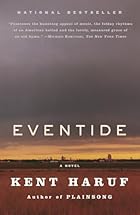
Review: Eventide by Kent Haruf


This sequel to Plainsong is every bit a good as the first. I can't seem to get enough of Kent Haruf and his picture perfect portrayal of the Midwest. I'm a coastal person, but I have come to appreciate the way of life of the inhabitants of Holt Colorado and its environs. Eventide brings back the wonderful McPheron brothers, their ward Victoria and her daughter, we meet the hapless Wallace family in their dilapidated trailer, we meet Rose the social worker, and we see the hard-working, plain, loving, and giving way of life of the plains ranchers and small town merchants. It's another perfect piece of writing.

I simply can't get enough of Haruf's plain and simple scene setting and lyrical prose. There is not a wasted word, nor a wasted scene. His characters are real, the story is true to life, and although parts can be called extremely sad, they are simply statements of life as it is. The hope and grace he portrays in his characters keeps the story from being maudlin, and leaves the reader looking for more. If you haven't discovered this superb writer, run to your bookstore or library. You won't regret it.

Title: Eventide
Author: Kent Haruf
Publisher: Vintage (2005), Edition: Reprint, Paperback, 299 pages
Genre: contemporary fiction
Subject: life in small town
Setting: Holt Colorado
Series: Plainsong
Source: Public library
Why did I read this book now? I'd read the 1st and 3rd books, wanted to fill in the series.